

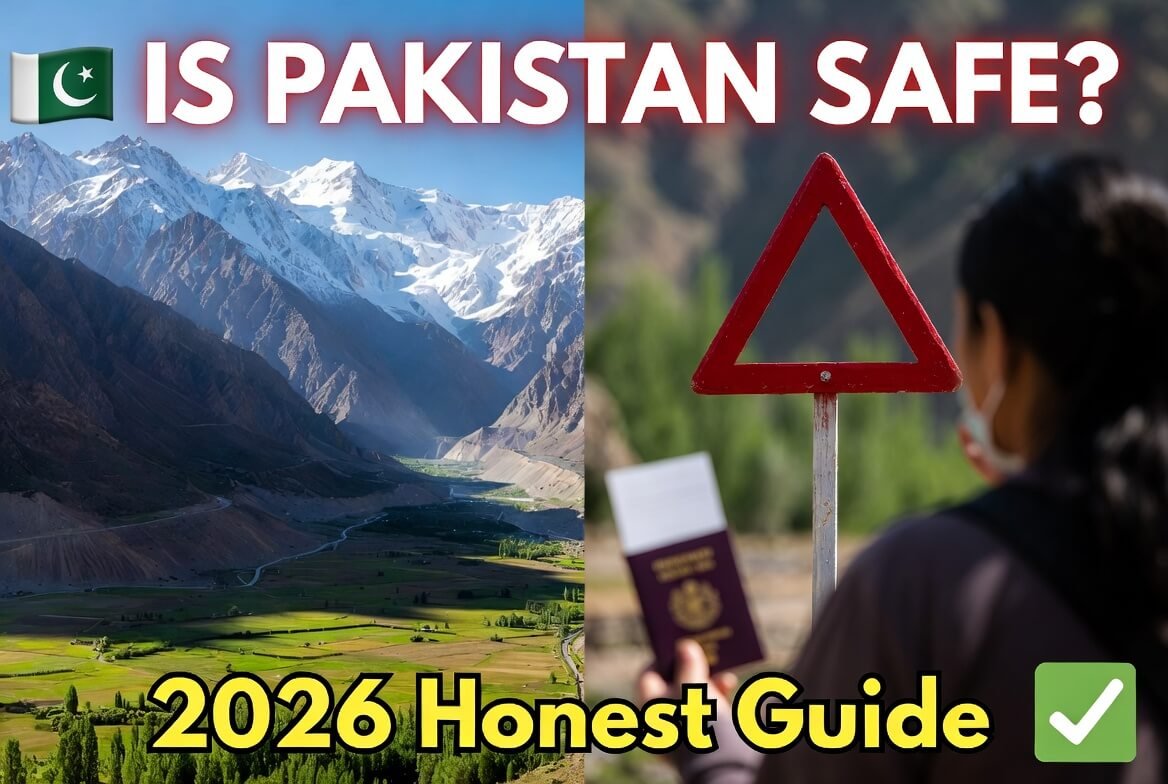
You’ve probably seen the headlines and official warnings that make you pause. I get it. Many people ask the same thing: “Is Pakistan safe to travel?” The truth is nuanced.
Pakistan isn’t a blanket “yes” or “no.” Some parts feel incredibly welcoming with stunning mountains and warm people. Other areas carry real risks that smart travelers avoid. In 2026, tourism is growing fast, especially in the north, but you need clear facts to plan well.
Many searchers like you searched about Pakistan travel guide, is Pakistan safe for tourists, is Pakistan safe for foreigners, how safe is Pakistan for solo travelers, how safe is Pakistan for female tourists, where is it safe to travel in Pakistan, and where should tourists avoid in Pakistan. This guide answers all your questions.
Latest Official Travel Advisories for Pakistan (2026)
Governments update their advice regularly. Here’s where things stand as of April 2026:
- US State Department: Level 3 Reconsider Travel overall due to terrorism, crime, kidnapping, and armed conflict. Some areas are Level 4 (Do Not Travel), especially Balochistan Province and parts of Khyber Pakhtunkhwa (KP) including former FATA (Federally Administered Tribal Areas).
- UK FCDO: Advises against all travel to certain border areas (within 10 miles of Afghanistan border) and against all but essential travel to other parts.
- Australia Smartraveller: Reconsider your need to travel due to volatile security and threat of terrorism, kidnapping, and violent crime.
- Canada: Exercise a high degree of caution, with extra warnings for Karachi.
These are broad. They don’t mean every city is equally risky. Many tourists visit popular spots without issues, but always check the latest from your government’s site before booking.
Pro tip: Register with your embassy (like STEP for Americans) and get travel insurance that covers Pakistan.
What the Data Shows in 2026
Is Pakistan worth visiting? If you are planning a Pakistan itinerary, the answer is yes:
- Improving global perception: Travel advisories from several countries, including the UK, Germany, and Japan, have been gradually eased for major Pakistani cities and key tourist regions.
- Rising tourism trend: International arrivals continue to grow, with over 1.3 million visitors recorded in 2024 reflecting a steady post-pandemic recovery and increasing global interest in Pakistan.
- Stronger travel infrastructure: The government is actively developing safer travel corridors, improving highways, and enhancing tourism regulation in popular destinations such as Hunza, Skardu, Swat, and Gilgit-Baltistan.
Safe Zones for Tourists
The following destinations are very Very Safe / Highly Recommended for Tourists:
- Hunza Valley, Skardu, and much of Gilgit-Baltistan: These stand out as top picks. Towering peaks, lakes, and friendly locals make them favorites. Fairy Meadows and Nanga Parbat areas see many adventure seekers. Road travel on the Karakoram Highway has improved in tourist sections. Dream destinations for nature lovers, hikers, and photographers, surrounded by dramatic peaks and crystal-clear valleys.
- Islamabad: Pakistan’s modern and well-planned capital, known for its cleanliness, greenery, strong security, and comfortable urban lifestyle.
- Lahore: A vibrant cultural heart of the country, celebrated for Mughal-era architecture, rich history, and an unmatched street food scene.
- Fairy Meadows & Nanga Parbat Base Camp: Remote yet iconic adventure spots offering breathtaking views of one of the world’s highest mountains.
- Multan, Bahawalpur & Derawar Fort: Southern gems known for deep-rooted Sufi heritage, grand deserts, and historic architecture.
- Karachi: Pakistan’s largest metropolitan city, located along the Arabian Sea, offering a mix of beaches, business hubs, and diverse urban culture.
- Mohenjo-daro & interior Sindh: A fascinating journey into ancient Indus Valley Civilization ruins and spiritual landmarks like Sukkur’s sacred sites.
My Favourite must-visit destinations in Pakistan:
These are my favourite visited places.
- Swat Valley: Often called the “Switzerland of Pakistan,” famous for lush green mountains, rivers, and scenic villages.
- Murree: A popular hill station near Islamabad, ideal for cool weather, pine forests, and family tourism.
- Naran Kaghan Valley: A stunning alpine region known for lakes like Saif-ul-Malook, waterfalls, and trekking routes.
- Neelum Valley: A picturesque valley in Azad Kashmir with rivers, forests, and peaceful mountain landscapes.
- Chitral: A culturally rich northern region surrounded by dramatic mountains and unique traditions.
- Kalash Valleys: Famous for the indigenous Kalash community, colorful festivals, and preserved ancient culture.
- Taxila: An ancient archaeological site showcasing Gandhara civilization and Buddhist heritage.
- Hingol National Park: Pakistan’s largest national park, known for unique rock formations, wildlife, and coastal desert scenery.
- Ranikot Fort: Often called the “Great Wall of Sindh,” one of the world’s largest forts with massive historic walls.
- Gwadar: A rapidly developing coastal city on the Arabian Sea, known for its port, beaches, and emerging tourism potential.
My practical advice is simple. If you plan northern travel, build in daylight driving, backup nights in transit cities, and a flexible return plan. Do not assume the shortest route is the best route. In a country with region-specific warnings, the “best” route is usually the one with the fewest moving parts.
Safety by Region
| Area | My practical read of the official advice | What it means |
| Pakistan overall | Mixed risk | Travel is possible, but not carefree |
| Balochistan | Highest concern | Avoid travel here unless you have a very strong, official reason |
| Border areas with Afghanistan and India | High concern | These are not casual tourist zones |
| Khyber Pakhtunkhwa | Mixed to high concern | Some districts are especially sensitive |
| Islamabad and major cities | Lower than border regions, | Plan transport, movement, and timing carefully |
| Northern highways and remote routes | Route-specific risk | Check the exact road, not just the city name |
Is Pakistan safe for solo travelers?
If you are asking how safe is Pakistan for solo travelers, the answer is yes, but not carefree. Solo travel raises the cost of mistakes because there is no backup person to manage confusion, translation, transport, or a sudden change in route. That is true everywhere, but it matters more in a country where some districts and roads carry active warnings. Smartraveller’s warning about violent crime, kidnapping, protests, and civil unrest makes this especially relevant for lone travelers.
For solo travelers, the rule is simple: keep your movement narrow and your plans boring. Book verified transport. Share your route. Avoid late-night arrivals where possible. Keep extra time between connections. Do not rely on a “we will figure it out when we get there” mindset. In Pakistan, that mindset can create unnecessary exposure.
Where to Travel with Caution in Pakistan
Some parts of Pakistan are absolutely fascinating, but they’re not the kind of places you just “wander into” as a casual traveler. These areas often require extra planning, local guidance, or in some cases, are best avoided unless you’re part of an organized or approved visit.
Interior Balochistan
This region is rich in landscapes and culture, but it’s not suitable for independent tourism right now. Movement can be restricted in certain zones, and security conditions vary.
If you’re dreaming of exploring this area, it’s better to wait until you’re traveling with official guidance or a trusted local arrangement rather than going solo.
Tribal Areas (Former FATA / merged districts of Khyber Pakhtunkhwa)
These areas require special permissions and are not designed for casual tourism. Even experienced travelers avoid spontaneous trips here.
Think of it as a region where “permission first, travel later” is the rule—not the other way around.
Border Areas with Afghanistan & Iran
These zones can change in terms of safety conditions quickly, depending on geopolitical or local developments.
Smart traveler approach is that always double-check official advisories before planning anything near these borders.
Some Remote Mountain Border Zones (Northern Frontier Edges)
Certain high-altitude regions near sensitive borders in Gilgit-Baltistan and adjoining frontier areas may have restrictions or seasonal access limits.
Isolated Desert & Sparse-Infrastructure Regions of Sindh & Southern Punjab
While culturally rich, some remote desert belts lack consistent emergency services, navigation support, or tourist infrastructure.
These areas are best explored with local drivers or guides who understand routes and conditions.
High-Altitude Passes During Winter (e.g., parts of Karakoram Highway region)
In winter, snow and landslides can make travel unpredictable in northern corridors. What looks like a dream road trip in photos can turn into a blocked route in reality, always check seasonal conditions before planning.
Urban Protest or Demonstration Zones
Cities like Lahore, Karachi, or Islamabad are generally safe, but protest activity can temporarily disrupt certain neighborhoods. Avoid large gatherings and follow local news or hotel advice during your stay.
Generally Safe with Precautions
- Karachi: Big city with energy, but watch for petty crime and avoid certain neighborhoods at night.
- Swat Valley and parts of KP: Better than before, but some travelers use guided tours.
Travel with Caution or Avoid
- Most of Balochistan (except maybe specific escorted routes): High risk of terrorism and kidnapping.
- Former FATA / tribal areas and Afghanistan/Iran border zones: Strong advisories against travel.
- Night travel in remote areas: Not ideal anywhere—stick to daylight hours on main routes.
| Region | Safety Level for Tourists | Key Advice | Popular Spots |
| Hunza, Skardu, GB | High | Standard precautions | Fairy Meadows, Altit Fort |
| Islamabad, Lahore | Medium-High | Busy areas okay, watch crowds | Badshahi Mosque, Food streets |
| Karachi | Medium | Daytime focus, avoid isolated spots | Beaches, markets (with care) |
| Balochistan | Low | Avoid or highly guided only | Limited for casual tourists |
| Ex-FATA / Borders | Very Low | Do not travel per advisories | None recommended |
Tourist Police & Local Support System
One underrated strength of Pakistan travel safety is that tourist support infrastructure exists in major destinations.
Tourist support is available in:
- Islamabad
- Lahore
- Murree
- Gilgit-Baltistan
- Hunza region
Tourist police units in these areas are generally cooperative and trained to assist foreign visitors.
Emergency & Help Line:
- Tourism Helpline (PTDC): 1422 Available for travel assistance and guidance in many regions.
Staying Connected
Most travelers in Pakistan use local SIM cards to stay safe and connected.
Popular networks:
- Jazz
- Telenor
- Zong
- SCOM (especially in northern regions like Gilgit-Baltistan)
- Sonic
- Ufone
Smart safety habit:
- Use Google Maps location sharing with your driver, hotel, or travel companion.
- Download offline maps before mountain travel.
Smart Safety Tips for Traveling in Pakistan
Here is a simple transport checklist:
- Use confirmed airport pickups.
- Keep copies of passport and visa on your phone and in paper form.
- Do not accept unclear route changes from strangers.
- Avoid isolated stops after dark.
- Check road advisories before a long drive.
Instead of fear-based advice, here is what experienced travelers actually do:
Use trusted local operators
Choosing verified companies ensures:
- Safe drivers
- Reliable hotels
- Local route knowledge
- Emergency backup
Avoid unnecessary night travel in remote regions
Mountain roads in areas like northern Pakistan can be:
- Unlit
- Narrow
- Weather-sensitive
Plan around weather, not just distance
In Pakistan, travel time is often controlled by:
- Landslides
- Snowfall
- Road conditions
Get travel insurance
Not because Pakistan is unsafe—but because:
- Terrain is unpredictable
- Long-distance travel is common
Before you book, check these things
Here is a pre-trip checklist:
- Confirm visa rules.
- Match your route against current advisories.
- Save embassy and emergency contacts.
- Book flexible transport.
- Carry paper and digital document copies.
- Set a modest dress plan.
- Avoid arriving late at night if possible.
Women Traveling in Pakistan (Reality-Based Insight)
is Pakistan safe for female travelers? and the honest answer is:
Yes. Many women travel across Pakistan successfully every year, including solo travelers.
But experience depends on behavior, route, and preparation.
What female travelers often report:
- Strong hospitality in northern areas
- Curiosity, but not hostility
- Helpful locals in cities and villages
Practical safety tips:
- Wearing shalwar kameez or modest clothing helps blend into local culture
- Choose reputable guesthouses or hotels
- Consider female guides or group travel in remote areas
- Avoid isolated travel late at night
Pakistan is a 100% safe country for tourists. Popular destinations such as Islamabad, Lahore, Hunza Valley, Skardu, Murree, and many parts of Gilgit-Baltistan are regularly visited by domestic and international travelers. If you’re thinking about going, start small, pick trusted spots, and enjoy the journey. Pakistan can surprise you in the best ways.
