

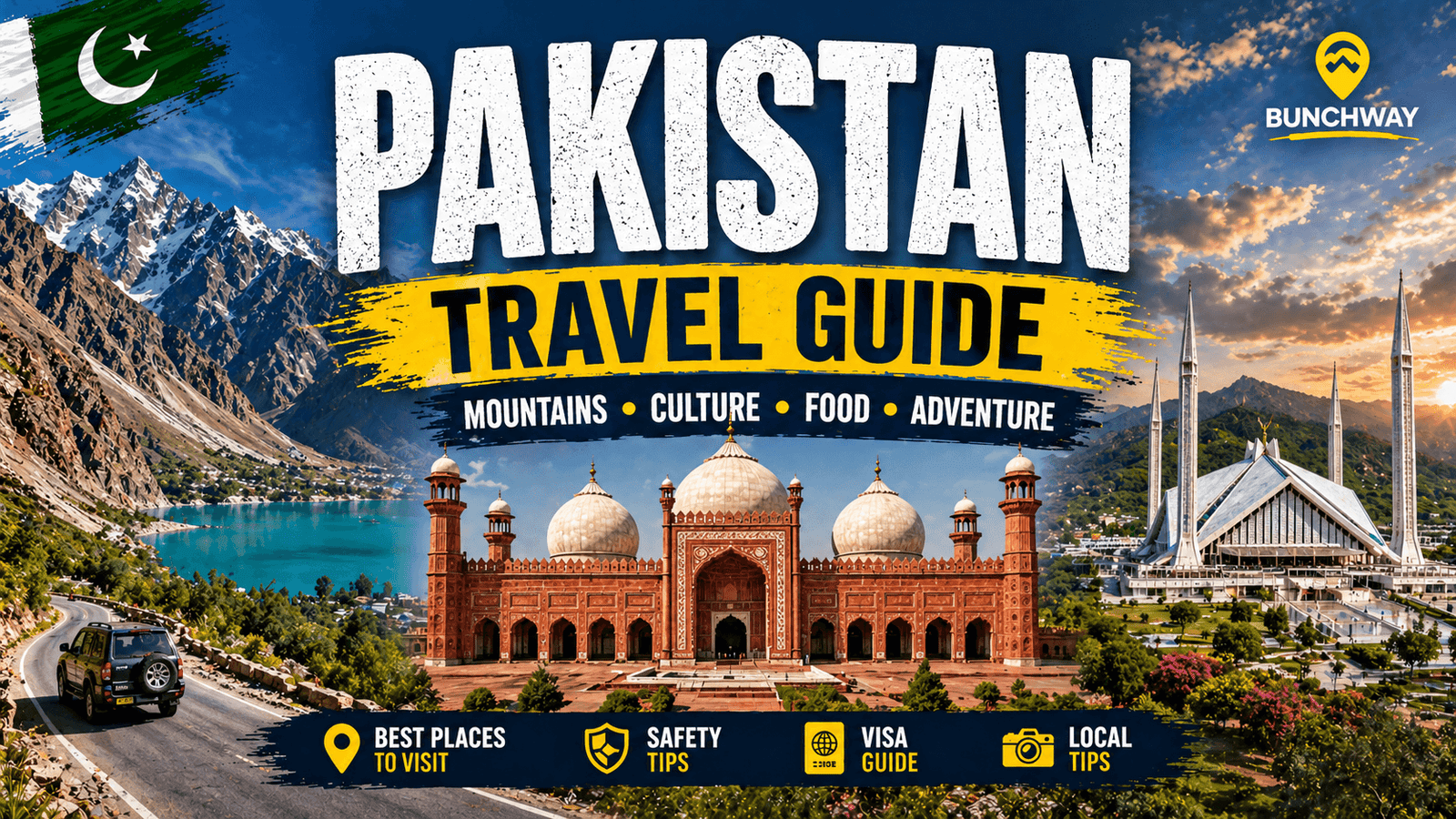
If your travel style is driven by contrast, Pakistan is a strong choice. Pakistan combines contrasting travel experiences. It is a land of high adventure and nature.
What makes Pakistan unique for travelers is the combination of:
- High-altitude adventure in the north
- Deep cultural heritage in cities like Lahore
- Modern urban life in Islamabad
- Coastal and commercial energy in Karachi
- Strong local hospitality across all regions
As a Traveller do you know what are the best places to visit in Pakistan? A well-planned journey combines different areas to understand the country fully, knowing where to travel for landscapes, culture, or adventure, when to go based on seasonal conditions, how to move between regions efficiently, how to stay safe through smart planning, and how to make the trip feel local by embracing regional food, traditions, and everyday experiences.
Unlike highly commercialized destinations, Pakistan offers a raw, evolving travel experience. This is why it appeals to photographers, trekkers, cultural travelers, and road-trip explorers alike. You can build a trip around places to visit in Pakistan, Pakistan destinations, and hidden gem destinations without needing to rush.
Where is Pakistan Located
Pakistan is located in South Asia in the Northern Hemisphere, bordering the Arabian Sea and sharing land borders with India, Afghanistan, Iran, and China; it is slightly smaller than Texas. It operates on a single time zone (Pakistan Standard Time, PST) without daylight saving, and is 10 hours ahead of Washington, D.C. during Eastern Standard Time (EST).
Why Pakistan Is a Unique Travel Destination
Pakistan is a travel destination where mountains, deserts, ancient cities, and modern urban centers exist within a single country. Unlike many other destinations that focus on one type of experience, Travelers can experience multiple landscapes within one country in one journey.
As a traveler, if you are planning a Pakistan itinerary, you can explore the Himalayan and Karakoram mountain ranges in the north, experience centuries-old Mughal architecture in the heart of Punjab, discover modern city life in Islamabad, and enjoy coastal energy in Karachi. Gilgit-Baltistan is one of the best tourist spots in Pakistan and Gilgit and Skardu are the two main hubs for mountain expeditions.
What Surprised Me Most About Pakistan
The biggest surprise was how strong local hospitality felt across completely different regions. Whether in a city market, mountain village, or roadside tea stop, travelers often experience generosity that feels deeply personal rather than transactional.
Another surprise was how diverse Pakistan really is. Lahore, Karachi, Hunza, Skardu, Swat, Islamabad, Faisalabad, Multan, Bahawalpur & Derawar do not feel like variations of one place they feel like distinct travel systems with different rhythms, food cultures, landscapes, and social energy.
Pakistan Travel Overview
Pakistan can be understood as four major travel zones:
Northern Pakistan
This region includes Gilgit-Baltistan, Hunza, Skardu, Fairy Meadows & Nanga Parbat Base Camp, and surrounding valleys. It is known for mountains, glaciers, lakes, and road trips along the Karakoram Highway.
Punjab
Punjab represents cultural heritage, historical cities, and food experiences. Lahore is the most visited city in this region.
Sindh
Sindh is home to Karachi, a major coastal metropolis with a mix of modern city life and traditional culture like Mohenjo-daro and hidden places and hidden gems like Sadhu Bela Temples in Sukkur..
Khyber Pakhtunkhwa and Islamabad Region
This includes Swat, Chitral, and Islamabad. Murree and Islamabad together serve as accessible gateways to northern exploration.
Pakistan Travel at a Glance
| Category | Best For | Intent Type |
| Northern Pakistan | Mountains, lakes, trekking | Adventure / Nature |
| Lahore | Culture, food, heritage | Cultural exploration |
| Islamabad | Clean city, planning base | Transit / city break |
| Karachi | Urban + coastal experience | Urban travel |
| Hunza & Skardu | Iconic landscapes | Destination travel |
As a traveler, Pakistan destinations work best when viewed as regional travel zones, not a single destination.
Best Time to Visit Pakistan
Which place should I visit first in Pakistan? The best time to visit depends entirely on the region you plan to explore.
Northern Pakistan (Hunza, Skardu, Gilgit-Baltistan)
Is northern Pakistan worth visiting? Yes, Northern Pakistan is most attractive when the lowlands are hot.
Best season: April to October
Ideal for: trekking, lakes, road trips, photography
Weather: pleasant in summer, cold in winter
Lahore and Central Punjab
Is Lahore worth visiting? Attractions such as Badshahi Mosque, Lahore Fort, Walled City, Food Street, and Minar-e-Pakistan make Lahore especially appealing for travelers interested in heritage, food, and urban storytelling. Best from October to March due to mild temperatures and comfortable sightseeing conditions.
Best season: October to March
Ideal for: food tours, heritage walks, festivals
Weather: Summer can be extremely hot
Islamabad
Best season: Year-round (best in spring/autumn)
Ideal for: relaxed city travel, hiking nearby hills
Karachi
Best from November to March when the coastal climate is cooler.
Best season: November to March
Ideal for: coastal weather, food, Beach, city exploration
Seasonal Summary
- Spring → Balanced weather nationwide
- Summer → Best for Northern Pakistan only
- Autumn → Photography + clear skies
- Winter → Southern cities + snow in north
The best time to visit Pakistan depends on where you are going.
| Season | What it is best for | Why so |
| Spring | Flowers, mild city travel | Great for Lahore and Islamabad |
| Summer | Northern Pakistan, mountains, lake trips | Northern regions have pleasant weather in summer and the peak tourist season for some northern areas runs April to October. |
| Autumn | Clear skies, golden landscapes | Excellent for photography |
| Winter | Snow scenes in some northern spots | Best only if you like cold travel |
A good Pakistan travel itinerary usually pairs mountain travel with a city stop, instead of trying to do everything in one weather window.
Is Pakistan safe?
Travel safety in Pakistan depends on awareness, planning, and location choice.
Like many countries, Pakistan has regions with different security conditions. Major tourist areas such as:
- Islamabad
- Lahore
- Hunza
- Skardu
- Muree
- Faisalabad
- Multan
are widely visited by both domestic and international travelers.
General safety recommendations include:
- Following official travel advisories
- Avoiding unnecessary travel at night in remote areas
- Using trusted transport and accommodation
- Keep documents secure
- Staying informed about weather and road conditions
Your responsible planning ensures a smooth travel experience, especially in mountain regions where conditions can change quickly. FCDO also recommends checking insurance and emergency planning before travel.
Pakistan is travelable with smart planning, especially in established tourist routes.
Why Pakistan Attracts Global Travelers?
Pakistan is increasingly being discovered for its contrast-driven travel experience.
Main Travel Drivers:
- Dramatic mountain landscapes
- Ancient civilizations and Mughal architecture
- Road trip culture in the north
- Strong hospitality traditions
- Orange train adventures in Lahore
- Affordable travel compared to many destinations
Unlike heavily commercial destinations, Pakistan still offers:
- Less crowded natural sites
- Authentic local interactions
- Unfiltered cultural experiences
This makes it ideal for travelers like you who are seeking real-world exploration rather than packaged tourism.
Pakistan Visa Guide
Pakistan uses an official online visa system for tourists and visitors and most travelers. Travelers are required to complete an application form, submit documents such as passport and travel details, and pay fees through the official visa portal.
You must think how do I get a Pakistan tourist visa? You need to follow basic Process:
- Create account on official Pakistan visa portal
- Fill online application form
- Upload documents (passport, photo, travel plan)
- Pay visa fee online
- Wait for approval
Common Visa Types:
- Tourist Visa
- Business Visa
- Family Visit Visa
Important Notes:
- Processing time varies by nationality
- Apply at least 2–4 weeks before travel
- Always use official government channels
Note: The official system is designed to simplify tourism entry and is widely used by international visitors. Travelers should always rely on official government systems for visa processing.
What common Mistakes Travelers Make in Pakistan
One of the biggest mistakes first time travelers make is trying to cover too much too quickly. Pakistan is large, road travel can be unpredictable, and mountain routes often take longer than expected due to weather, terrain, or traffic.
Another common mistake is ignoring seasonality. Many travelers underestimate summer heat in central Pakistan or winter road closures in northern areas. Smart travelers plan by region, check weather carefully, and build flexibility into their itinerary instead of forcing rigid schedules.
Travel Planning Order
If you are a first-time visitor, follow this sequence:
Step 1: Visa approval
Ensure documents and approval are complete first.
Step 2: Safety research
Check updated travel advisories for regions.
Step 3: Choose season
Match your trip with region-specific weather.
Step 4: Build route plan
Suggested order:
- Islamabad (arrival base)
- Northern Pakistan (main highlight)
- Lahore (culture stop)
- Optional Karachi (urban extension)
Northern Pakistan Travel Guide
Northern Pakistan is the most iconic travel region in the country and the main reason international travelers visit. It is home to some of the world’s highest mountains, glaciers, alpine lakes, and dramatic valleys.
Is Pakistan good for mountain travel? Yes key mountain destinations in northern areas of Pakistan include:
- Hunza Valley
- Skardu
- Gilgit
- Fairy Meadows
- Deosai Plains
This region is ideal for trekking, photography, road trips, and cultural exploration. It also offers a unique combination of natural beauty and local traditions. I recommend this to you for high-adventure + nature + cultural heritage zone.
Hunza Valley Travel Guide
Hunza Valley is one of the most popular travel destinations in Pakistan. It is known for its mountain scenery, historic forts, and peaceful environment.
It is located in Gilgit-Baltistan and is known for:
- Snow-covered peaks
- Green valleys
- Ancient forts
- Apricot and fruit orchards
- Friendly local culture
Key attractions in Hunza:
- Karimabad (main town center)
- Altit Fort
- Baltit Fort
- Attabad Lake
- Passu Cones
- Hussaini Suspension Bridge
What makes Hunza unique?
Hunza offers a combination of natural beauty and cultural heritage. The valley is also known for its hospitality and local traditions. It is:
- One of the most peaceful valleys in the region
- A cultural hub with strong traditions
- A blend of nature + history + hospitality
Best travel experience in Hunza:
- Sunrise at Eagle’s Nest viewpoint
- Boat ride on Attabad Lake
- Road trip on Karakoram Highway
- Local food experience in Karimabad
Hunza works best as a 3–5 day destination inside a Pakistan travel itinerary.
Skardu Travel Guide (Gateway to the Himalayas)
Skardu is another major hub of Northern Pakistan and is often considered the gateway to some of the highest mountains in the world. Is Skardu worth visiting? It connects travelers to:
- K2 region
- Broad Peak
- Gasherbrum ranges
Key attractions in Skardu:
- Shangrila Resort (Lower Kachura Lake)
- Upper Kachura Lake
- Deosai National Park
- Shigar Fort
- Satpara Lake
- Katpana Cold Desert
Why Skardu is important for tourism
Skardu is not just a scenic valley. It is:
- A trekking base for major expeditions
- A high-altitude adventure hub
- A mix of desert, lakes, and mountains in one region
Travel experience style:
- Long scenic road journeys
- Jeep rides into valleys
- Camping and trekking
- Photography-focused travel
Skardu is ideal for trekking, camping, and adventure travel. It offers some of the most raw, untouched dramatic landscapes in Pakistan.
Road Reality in Pakistan: What Travelers Should Honestly Expect
Road travel in Pakistan can be unforgettable, but it is not always easy. Distances that look short on maps can take much longer because of mountain roads, checkpoints, construction, or weather conditions.
Northern travel especially requires patience. Landslides, delayed departures, rough patches, and altitude shifts are all real possibilities.
Lahore Travel Guide
Lahore is the cultural capital of Pakistan and it is located in Punjab and is one of the oldest continuously inhabited cities in South Asia.
Is Lahore safe for solo travelers?
As a traveler you must think where to go in lahore? My answer is very simple for you that the major attractions are these where you must need to go as a traveler:
- Badshahi Mosque
- Lahore Fort
- Minar-e-Pakistan
- Shalimar Gardens
- Walled City of Lahore
- DHA Raya
- Lahore zoo
- Anarkali Bazar
- Chuburji
Why travelers love Lahore:
Lahore offers:
- Mughal heritage architecture
- Street food culture
- Vibrant nightlife (Food Streets)
- Historical storytelling at every corner
Food experience in Lahore:
As a traveler like others you must think what to eat, and how many days to stay in Lahore as an explorer. Then I will give you my honest review and will recommend must visit food spots in Lahore.
Classic Lahori food experience (What to eat):
- Nihari & Paya – rich, slow-cooked breakfast staples
- Halwa Puri – iconic Sunday-style breakfast
- Seekh kebabs, tikka & chargha – Lahore’s BBQ backbone
- Gol gappay, chaat & samosas – street-snack essentials
- Lassi & falooda – cooling sweet finish
Lahore is best for 2–3 day cultural exploration.
Islamabad Travel Guide
Islamabad is Pakistan’s capital and is known for its clean, organized layout and green surroundings.
It is often the entry point for international travelers.
Key attractions:
- Faisal Mosque
- Daman-e-Koh viewpoint
- Pakistan Monument
- Lok Virsa Museum
- Margalla Hills hiking trails
- Lake View Park
Why Islamabad matters for travelers:
Islamabad is:
- Safe and organized compared to other cities
- Close to northern travel routes
- Ideal for rest and preparation before mountain trips
Best travel experience:
- Hiking in Margalla Hills
- Sunset view from viewpoints
- Cultural museum visits
- Relaxed city exploration
Islamabad is not just a city, it is a transition hub into Northern Pakistan and Islamabad itinerary is ideal for short stays or transit.
Faisalabad
Faisalabad, often called the industrial heart of Pakistan, offers a different side of travel—one built on authentic Punjabi culture, bustling bazaars, legendary street food, and everyday local energy rather than tourist landmarks. Some must visit places in Faisalabad are these where you need to go to explore the culture deeply.
Ghanta Ghar (Clock Tower): the city’s historic centerpiece, surrounded by the famous eight bazaars, ideal for shopping, heritage walks, and old Faisalabad energy
Food Culture: From traditional Punjabi breakfasts and dhaba dining to street food and modern cafés, Faisalabad is underrated for bold flavors and local hospitality
Kohinoor City: Faisalabad’s modern lifestyle hub, known for upscale dining, cafés, shopping, and some of the best restaurants in Kohinoor City experiences.
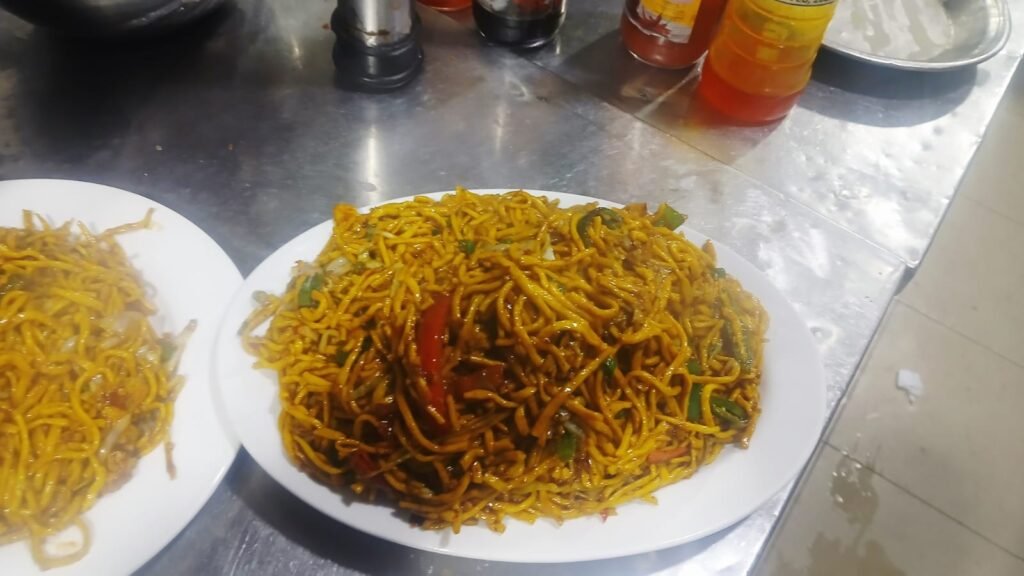
Textile Capital Identity: famous for fabrics, wholesale markets, and Pakistan’s business culture, making it a practical destination for commerce and shopping
Local Experience: Faisalabad feels real, energetic, and deeply connected to everyday Pakistan, ideal for travelers who want authenticity over polished tourism
Best Time to Visit: winter and cooler months offer the best weather for food exploration, city walks, and comfortable market visits.
It is perfect as a cultural stop for food lovers, business travelers, and visitors wanting to experience genuine urban Punjab.
Karachi travel guide
Karachi matters because serious tourism in Pakistan should not forget the country’s largest city and financial hub.
Along this, Karachi is the largest city in Pakistan and a major economic center located along the Arabian Sea in the province of Sindh. It represents:
- Urban energy
- Coastal lifestyle
- Business and trade center
- Diverse food culture
Key attractions:
Key attractions are:
- Clifton Beach
- Quaid-e-Azam Mausoleum
- Pakistan Maritime Museum
- Port Grand
- Saddar markets
- Frere Hall
Why Karachi is different:
Karachi offers a mix of coastal lifestyle, urban energy, and diverse food culture. It is best for short city-based travel. Karachi is:
- Fast-paced and modern
- Culturally diverse
- A mix of coastal and metropolitan life
Travel experience:
- Street food exploration
- Beachside walks
- Urban photography
- Market shopping
Karachi is best for 2–3 day city exploration, not long stays for most tourists.
Budget Travel in Pakistan (Realistic Cost Planning)
Pakistan is often considered a budget-friendly destination, but real travel costs depend on your travel style, route, and comfort level.
Instead of giving fixed prices (which change frequently), it is better to understand cost structure logic. Can I travel Pakistan on a budget? As a traveler I follow this structure:
Travel Budget Levels
| Travel Style | What You Use | Best For |
| Budget Travel | Local transport, guesthouses, street food | Backpackers |
| Mid-Range Travel | Private transport + 3-star hotels | Couples / families |
| Comfort Travel | Private car + quality hotels | Premium travelers |
Where most money goes, major expenses include:
- Transport (especially northern routes)
- Accommodation in peak season
- Private jeeps in mountain areas
- Flights (if skipping long road routes)
Smart Budget Tips
- Travel off-season for cheaper hotels
- Use shared transport where possible
- Book accommodation in advance in Hunza/Skardu
- Eat local food instead of tourist restaurants
- Combine destinations in one route (avoid backtracking)
In my opinion as a traveler, budget travel in Pakistan is less about “cheap country” and more about smart route planning + season timing.
Backpacking Pakistan Guide
Backpacking in Pakistan is growing because the country offers long routes, affordable stays, and strong road connectivity between major tourist regions.
Backpackers do well here when they stay flexible, check road conditions, keep a copy of their passport, and build their trip around connected hubs like Islamabad, Hunza, and Skardu.
Ideal backpacking route:
- Islamabad (start)
- Hunza Valley
- Skardu
- damn e koh
- Murree
- Swat
- Abbottabad
Backpacking reality in Pakistan
Unlike Europe-style backpacking, Pakistan requires:
- Longer travel days
- Fewer last-minute changes
- Road condition awareness
- Flexible itinerary planning
Essential backpacking tips
- Always carry ID and passport copy
- Keep offline maps downloaded
- Travel early in the day (especially mountains)
- Use trusted local transport services
- Respect local customs and dress modestly where needed
Backpacking in Pakistan here is not fast-paced, it is slow, scenic, and route-based travel.
Pakistan Food Guide
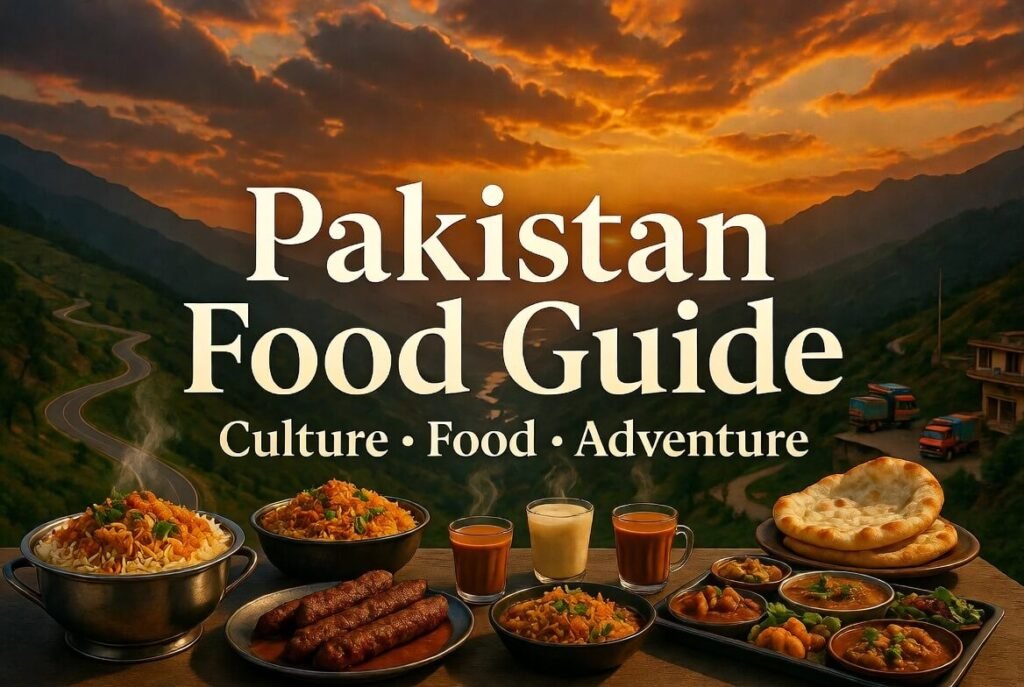
Food is an essential part of the travel experience in Pakistan. What food should I try in Pakistan? Pakistan offers a diverse food culture across regions.
Lahore (Food Capital Experience)
Known for traditional dishes like:
- Nihari
- Paya
- BBQ (seekh kebab, tikka)
- Street food in Food Street
- Fast Food
- Pizza
- Desi/Chinease food
Best places to experience Lahore’s food culture:
- Gawalmandi Food Street: old-school Lahori street food, heritage vibe, classic desi specialties
- Fort Road Food Street: Walled City setting near historic landmarks, ideal for evening dining
- Haveli Restaurant: rooftop dining with iconic Old Lahore views
- Salt’n Pepper Village Lahore: broad traditional menu in a family-style setting
- Yum Chinese & Thai: Pan-Asian dining, polished Gulberg vibe, Chinese/Thai specialties, sushi, and premium casual atmosphere
- Spice Bazaar: refined Pakistani fine dining, elegant ambiance, premium karahi, BBQ, and authentic desi flavors
- Monal Lahore: rooftop dining, scenic city views, broad Pakistani/continental menu, ideal for evenings and family gatherings
- Masalawala: lively modern desi spot, energetic social setting, BBQ, karahi, and trendy casual dining
- Andaaz Restaurant: heritage rooftop dining, Badshahi Mosque views, upscale Pakistani cuisine, romantic Old Lahore atmosphere
- Cuckoo’s Den: artistic Walled City icon, cultural decor, Mughal-era ambiance, classic Lahori dining with historic charm
- Butt Karahi Lakshmi Chowk: legendary Lahori karahi, no-frills local favorite, spicy mutton/chicken specialties
- Phajja Siri Paye: historic breakfast institution, traditional siri paye, rich Lahori culinary legacy
- Arif Chatkhara: famous street-side chaat, gol gappay, dahi bhallay, and authentic Lahore snack culture
- Bundu Khan: classic BBQ and Pakistani cuisine, family-friendly, dependable kebabs and grilled specialties
- Tawa Piece House: iconic Lakshmi Chowk specialty, spicy tawa chicken, old Lahore fast-food classic
- Capri Restaurant: late-night Lahore favorite, desi comfort food, casual dining, and social hotspot
- Haveli Kabab & Grill: rooftop Mughal backdrop, BBQ-focused menu, heritage-meets-modern Lahore experience
- Village Lahore: cultural village-style decor, broad Pakistani menu, traditional family dining experience
- Waris Nihar: iconic nihari destination, rich breakfast tradition, deep Lahori desi roots
- Amritsari Hareesa: winter comfort food favorite, slow-cooked hareesa, old Lahore specialty
Lahore is best for rich, traditional Mughal-inspired cuisine.
Karachi (Urban Food Diversity)
- Biryani
- Seafood dishes
- Roll parathas
- Fast food fusion culture
Karachi offers variety and coastal flavor influence.
Northern Pakistan (Hunza / Skardu)
- Local bread (chapati style foods)
- Dried fruits
- Apricot-based dishes
- Simple mountain cuisine
Food here is organic, seasonal, and locally sourced.
Islamabad
- Clean cafés
- Modern restaurants
- Fusion cuisine
Islamabad is best for comfortable dining and variety, with premium options like Marriott and Serena in Islamabad, while Pearl-Continental (PC) offers luxury stays in Bhurban, Murree, and Lahore.
Transport Guide in Pakistan
Transport plays a huge role in your travel experience, especially for long-distance routes. And, transport in Pakistan includes domestic flights, buses, private cars, and jeep services.
1. Domestic Flights
- Best for saving time
- Used for Islamabad → Skardu / Gilgit
2. Road Travel
- Most common for northern trips
- Scenic but long journeys
3. Buses (Intercity Coaches)
- Budget-friendly
- Comfortable options available
4. Private Car / Jeep
- Best flexibility
- Required for remote valleys
Pakistan travel is route based tourism, not city-hopping tourism. Important travel reality
- Northern roads can take 10–15 hours between major points
- Weather can affect routes (landslides, snowfall)
- Always check road conditions before travel
Local Driver Tips: My advice From the Roads
Local drivers often understand Pakistan better than travel blogs because they know how roads actually behave. In northern regions, early departures are essential because weather, landslides, and traffic become bigger risks later in the day.
Drivers also know practical details tourists often miss: where to refuel before remote routes, which roads are scenic but slower, and when private transport is worth paying for. In Pakistan, a trusted driver can often improve both safety and experience.
Cultural Tips
Pakistan has a strong hospitality culture. Travelers are encouraged to:
- Greet people politely
- Respect religious places
- Dress modestly in rural areas
- Ask before taking photos
- Accept hospitality respectfully
Cultural awareness improves travel experience significantly.
What makes Pakistan special culturally
- Strong hospitality tradition
- Family-centered society
- Deep respect for guests
- Regional cultural diversity
Travelers are often surprised by how welcoming locals are.
Travel Insurance for Pakistan
Travel insurance is highly recommended, especially if your itinerary includes:
- Mountain travel
- Long road trips
- Trekking activities
Why insurance matters:
- Medical emergencies in remote areas
- Trip delays due to weather
- Lost luggage or documents
- Emergency evacuation coverage
In mountain regions like Skardu or Hunza, insurance becomes especially important due to unpredictable terrain and weather conditions.
Frequently Asked Questions (FAQs)
Is Pakistan safe for tourists?
Safety depends on region and preparation.Popular destinations such as Islamabad, Lahore, Hunza Valley, Skardu, Murree, Faisalabad, Multan, Karachi and many parts of Gilgit-Baltistan are regularly visited by domestic and international travelers. But travelers should always follow official travel advisories and local guidance.
What is the best time to visit Pakistan?
The best time to visit Pakistan depends on your destination and travel style. For Northern Pakistan, including Hunza, Skardu, and Gilgit-Baltistan, April to October is ideal for mountain views, lakes, and road trips. Lahore, Islamabad, and other central cities are usually best from October to March when temperatures are milder.
- North: April to October
- Central: October to March
Overall best: Spring and autumn are ideal for most regions.
Do I need a visa for Pakistan?
Yes, most travelers need a visa. Pakistan provides an official online visa system that supports tourist and visit visa for tourist applications.
What Makes Pakistan Different from Other Destinations?
Pakistan is not a “single-experience” destination. It is layered:
- Mountains in the north
- Cultural cities in the center
- Historic heritage in Punjab
- Coastal life in the south
Most countries offer one dominant travel identity. Pakistan offers multiple identities in one journey.
Is Pakistan easy for first time travelers?
Yes, Pakistan can be manageable for first-time travelers when you start with structured routes like Islamabad, Hunza, Lahore, or Skardu. Beginning with popular travel corridors makes logistics easier.
What matters most to visit Pakistan?
Visa, safety research, weather timing, and route planning matter more than over-planning attractions. Pakistan works best when your logistics are stronger than your assumptions.
What creates the best experience?
Regional depth. Instead of trying to “see Pakistan,” focus on one travel style at a time: mountains, culture, food, or hidden gems and build around that.
Which place should I visit first in Pakistan?
For a first trip, many travelers start with Islamabad (arrival base) for ease, then go north to Gilgit-Baltistan, Hunza or Skardu, and add Punjab, Sindh, Khyber Pakhtunkhwa like Lahore, Multan, karachi for culture and food.
Is northern Pakistan worth visiting?
Yes. Gilgit-Baltistan is one of the best tourist spots in Pakistan. It is the most visually stunning and popular region, known for mountains, lakes (Saif-ul-Malook), and road trip experiences.
How many days do I need for a Pakistan travel guide trip?
A short trip can cover one city and one northern region. A fuller trip usually needs more time because Pakistan works best when you travel slowly and allow room for roads, weather, and local pacing. That is especially true in mountain areas.
How many days are enough? A strong first time itinerary often follows this structure:
7–10 Day Route:
- Islamabad (2 days)
- Hunza or Skardu (4–5 days)
- Lahore (2–3 days)
2–3 Week Route:
- Islamabad
- Hunza
- Skardu
- Swat or Murree
- Lahore
- Karachi (optional)
I follow this approach that balances my safety, scenery, culture, and logistics.
Is Pakistan good for backpacking?
Pakistan can be an excellent backpacking destination for travelers who enjoy flexibility, long routes, and authentic experiences.
Is Lahore worth visiting?
Yes, Lahore is one of Pakistan’s strongest cultural destinations. It is known for Mughal architecture, historical landmarks, street food, traditional bazaars, and old-city energy.
What food should I try in Pakistan?
Travelers should explore regional food rather than only famous dishes. In Lahore, nihari, paya, halwa puri, BBQ, and street snacks are major highlights. Karachi is known for biryani, seafood, and roll parathas. Northern Pakistan offers local breads, dried fruits, apricot products, and mountain cuisine. Food is a major part of Pakistan’s travel identity.
Conclusion
Pakistan is not a single destination, it blends adventure, heritage, and urban life which offers mountains, culture, history, and modern city life.
You do not “visit Pakistan.” You experience it region by region.
My Real Journey Through Pakistan
As a Pakistani What changed my view of Pakistan most was how dramatically each region felt like a different country within one trip. From Lahore’s historic streets and nonstop food culture to Hunza’s peaceful valleys and Skardu’s raw mountain scale, Pakistan was less about one destination and more about moving through contrasting worlds.
As a traveler, the biggest lesson was simple: Pakistan rewards slow travel. The best experiences came when I stopped rushing, stayed longer in each region, listened to locals, and treated the journey itself, especially the roads as part of the adventure.
The best approach is to travel slowly, plan according to seasons, and explore each region with flexibility, awareness, and cultural curiosity.
