

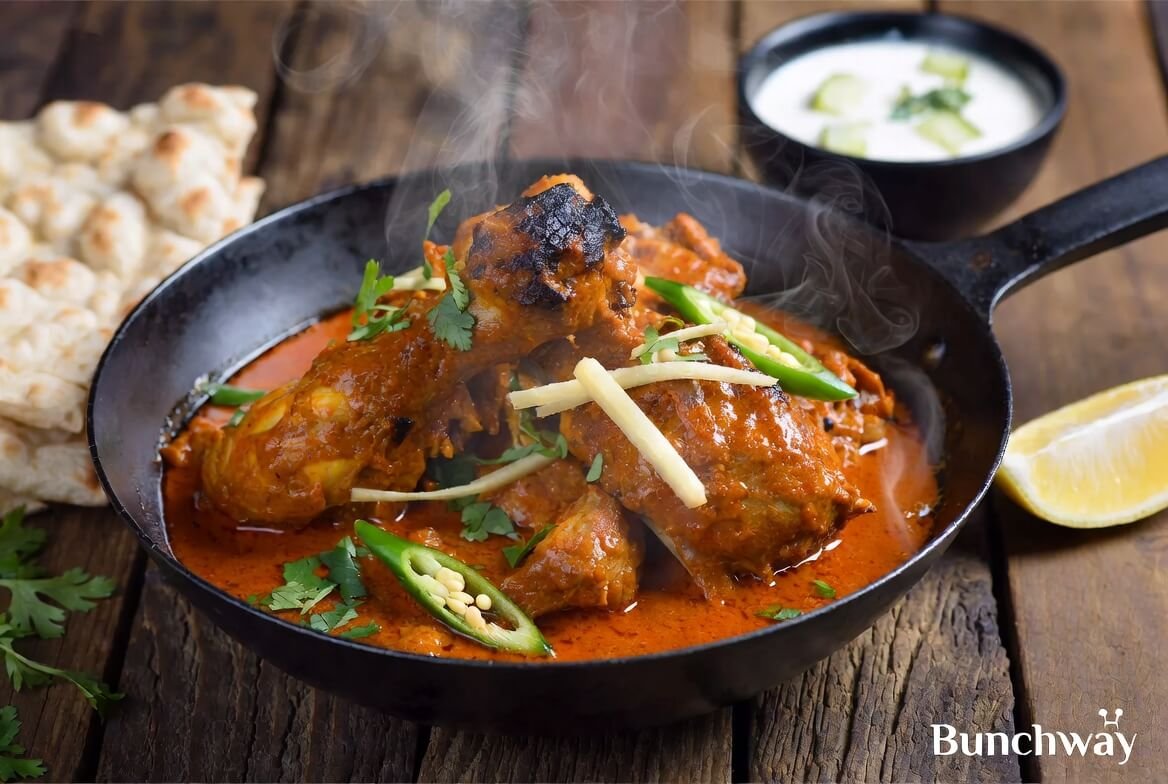
Two years ago, a Cothm Student named Hifsa walked into my kitchen in Faisalabad. She’d been living in UAE for five years and missed her mother’s chicken karahi so badly. She said, ‘I follow every recipe on Youtube, but it never tastes like home.’ I asked her one question: ‘Do you bhunao your masala properly?’ She looked confused. That’s when I realized that most people don’t fail at Pakistani cooking because they lack recipes. They fail because no one teaches them the techniques.”
The Problems are here:
- You want to cook authentic Pakistani food at home, but recipes online feel vague or too complicated.
- You don’t know which spices actually matter vs. which ones are optional
- Your curries taste flat, your rice turns mushy, your rotis come out hard
- You’re overwhelmed by ingredient lists and unfamiliar Urdu terms
- You wonder: “Will I ever cook like my mother or grandmother did?”
Cooking is chemistry. If you add things in the wrong order, the reaction changes. This isn’t superstition, it’s science.
Who Am I and Why Listen to Me?
I’m Chef Asif, former Sales Chef at UFS Pakistan (Unilever Food Solutions). I spent years training both professional chefs and home cooks across Punjab, Sindh, and KPK. I have taught hundreds of people from restaurant kitchens in Faisalabad, Lahore, Islamabad. And I have learned one thing that Pakistani cooking isn’t hard when someone explains it properly.
This guide is everything I wish someone had taught me when I started.
UNDERSTANDING PAKISTANI CUISINE: A REGIONAL JOURNEY
Pakistani cooking is a tapestry woven from four distinct regions, each with its own climate, history, and flavor philosophy. Understanding these differences will completely change how you approach recipes.
If you love exploring Pakistani food, culture, and destinations, you can also explore Pakistan travel guide for more insights.
When someone says “Pakistani food,” they usually mean Punjabi food, because Punjab is the most populous province and its cuisine dominates restaurants. But real Pakistani cuisine is so much richer than that.
If you love exploring these flavors beyond your kitchen, discover where to enjoy them at the best restaurants in Lahore and the rising food scene in Faisalabad.
Here’s what you need to know about each region:
Punjabi Cuisine:
What Defines It:
- Rich, creamy gravies with lots of onion-tomato base
- Heavy use of dairy (yogurt, cream, ghee)
- Tandoor culture (naan, tikka, seekh kebab)
- Long, slow cooking methods (nihari, haleem, paya)
Core Techniques:
- Bhunao (slow-browning masala until oil separates)
- Overnight marination for meat
- Layered flavor building (base → body → finish)
Signature Dishes:
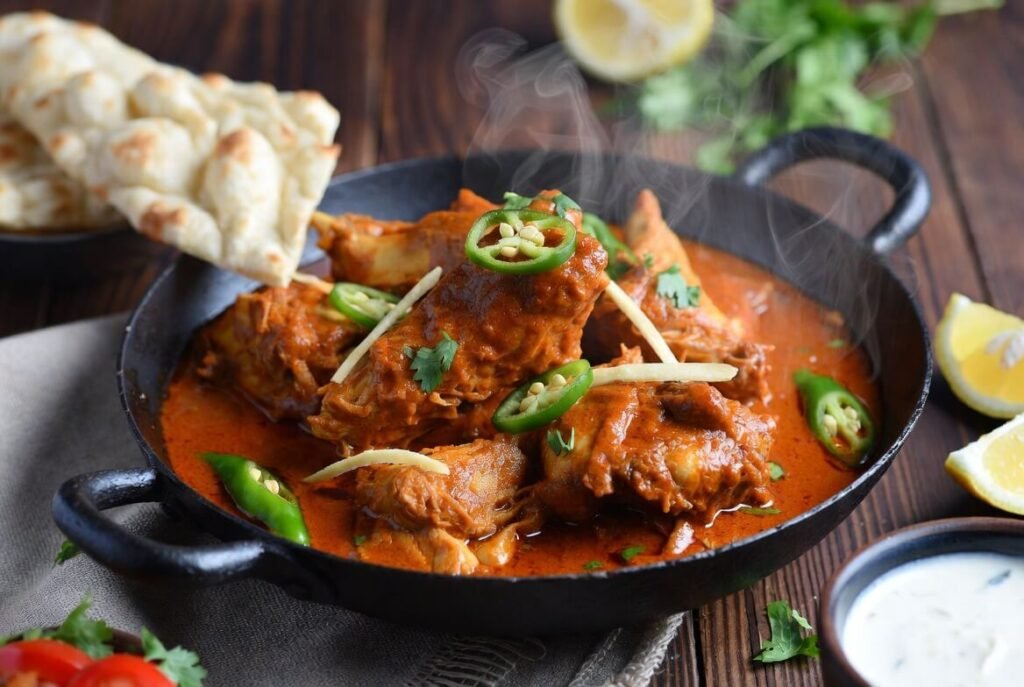
- Chicken karahi, mutton korma, nihari, haleem, Butter Chicken (Murgh Makhani), Tandoori Chicken, Dal Makhani
- Sarson da Saag (mustard greens), aloo gosht (potato-meat curry), Aloo Anday, Aloo Paratha, Makki di Roti
- Lassi, falooda, gajar halwa
Flavor Profile: Bold, robust, spice forward.
Punjabi food does not apologize for being rich. The philosophy is simple: good food needs time and good fat (ghee).
Sindhi Cuisine:
What Defines It:
- Influence from Gujarati and Rajasthani neighbors
- Souring agents like tamarind, kokum, dried mango (amchur)
- More vegetables and fish compared to Punjab
- Lighter gravies, less cream
Core Techniques:
- Tempering with curry leaves and mustard seeds
- Souring at the end of cooking (preserves brightness)
- Dry roasting spices before grinding
Signature Dishes:
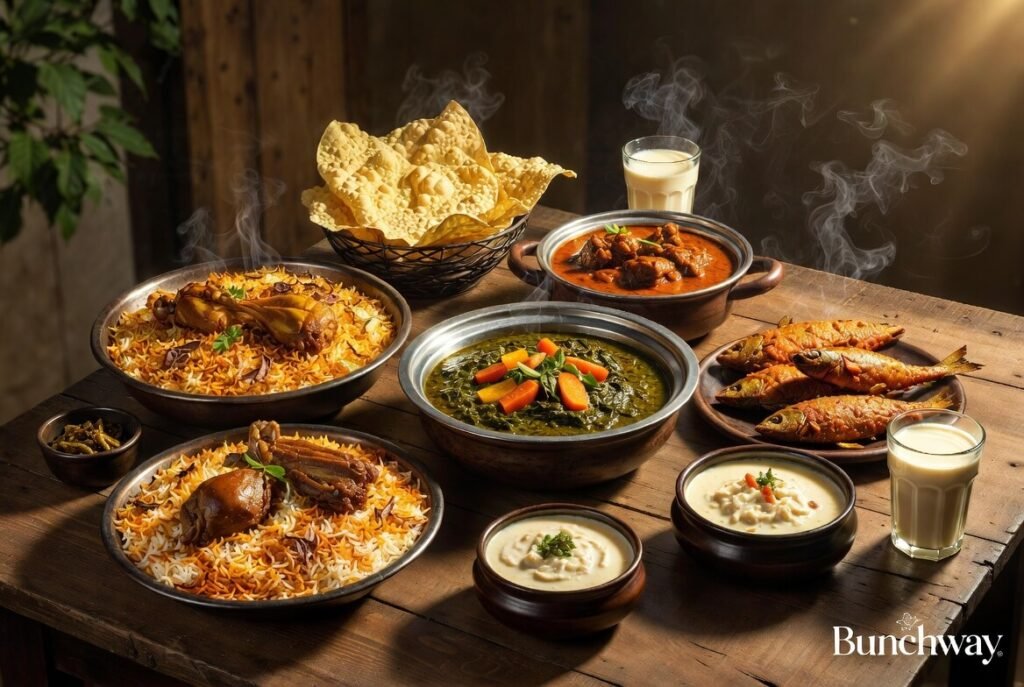
- Dal Pakwan: Crispy fried maida flatbreads with spiced moong dal, topped with chutneys.
- Sindhi Koki: Thick, spiced onion flatbread eaten with yogurt or pickle.
- Sindhi Kadhi: Tangy chickpea flour curry with seasonal veggies, served over rice.
- Sai Bhaji: Spinach, dill, and lentil stew paired with rice.
- Sindhi Biryani: Aromatic spiced rice layered with meat and potatoes.
- Aloo Tuk: Crispy fried potato chunks with bold spices.
- Mitho Lolo: Sweet ghee flatbread flavored with cardamom.
- Koki (Kali Mirch): Black pepper spiced version of the classic flatbread.
- Seyal Pallo Machi: Onion, tomato fish curry, often with Hilsa.
- Bhee Ki Bhaji: Spiced lotus stem (bhee) stir-fry.
- Tidali Dal: Trio of lentils (moong, chana, urad) for a hearty side.
- Karachi Halwa: Gelatinous cornflour sweet studded with nuts.
- Taryal Patata: Thinly sliced, spiced pan-fried potatoes.
- Jowar Jo Dodo: Millet flatbread with green chilies and fenugreek.
- Seviyan: Sweetened vermicelli dessert for festivals.
Flavor Profile: Tangy, aromatic, and complex. Sindhi food uses more spices.
“Sindhi cooks taught me that acidity is a flavor layer, not just an afterthought. A squeeze of lemon at the end isn’t decoration, it balances the whole dish.”
Pashtun (KPK) Cuisine
What Defines It:
- Minimal spicing (salt, black pepper, tomatoes, green chilies)
- Emphasis on meat quality over masala complexity
- Charcoal grilling and dum pukht (sealed slow-cooking)
- Fat as flavor (tail fat, ghee, bone marrow)
Core Techniques:
- Using whole spices sparingly
- Charcoal grilling (chapli kebab, tikka)
- Dum cooking without opening the lid
Signature Dishes:
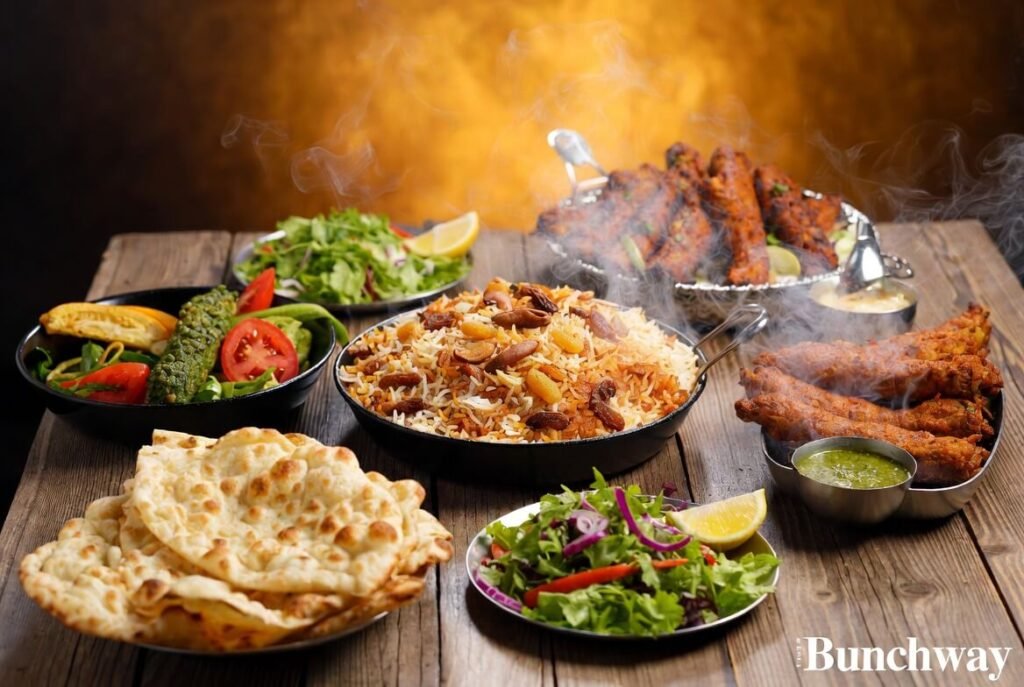
- Chapli Kebab: Pan fried crispy, Large and flat minced meat patties spiced with coriander, pomegranate seeds, and chilies.
- Kabuli Palaw: Steamed basmati rice layered with tender lamb, carrots, raisins, and nuts for festive meals.
- Peshawari Karahi: Goat meat cooked in a wok with tomatoes, ginger, garlic, and green chilies.
- Namkeen gosht (salt-only meat)
- Shinwari Tikka: Boneless lamb chunks marinated in yogurt and spices, roasted over charcoal.
- Seekh Kebab: Minced mutton skewers with onions, cilantro, and garam masala, grilled smoky.
- Shorwa: Hearty lamb and lentil soup thickened with chickpeas and bold spices.
- Peshawari Naan: Thick, elongated tandoor bread topped with sesame seeds and nigella.
- Aushak: Steamed leek dumplings topped with spiced lamb sauce and yogurt.
- Bannu Pulao: Spicy rice cooked with chickpeas, meat, and tomatoes from the Bannu region.
- Landi: Sun-dried spiced mutton chunks stir-fried with onions and served with rice.
Flavor Profile: Earthy, smoky, robust. Pashtun philosophy:
If the meat is good, don’t hide it under spices. I learned from Peshawar cooks that less can be more. Their chapli kebab has six ingredients. It’s perfect.
Balochi Cuisine
What Defines It:
- Whole roasting (sajji whole lamb roasted over coals)
- Wild game and range-fed meat traditions
- Minimal seasoning (salt, sometimes cumin)
- Nomadic cooking methods (portable, simple)
Core Techniques:
- Landhi (sun-dried meat preservation)
- Sajji method (skewering whole animals vertically)
- Coal-pit cooking
- Landhi (sun-dried meat preservation)
Signature Dishes:
- Sajji: (whole lamb or chicken)
- Kaak: Hard wheat flatbread baked around hot stone, pairs with meats.
- Dumpukht: Sealed-pot lamb and rice slow-cooked with minimal spices.
- Khaddi Kabab: Underground-roasted whole lamb stuffed with rice.
- Abgoosht: Lamb shank stew with beans, chickpeas, and potatoes.
- Landhi: Sun-dried spiced mutton stir-fried with onions.
- Balochi Karahi: Chicken cooked in wok with chilies, ginger, yogurt.
- Tabaheg: Goat roasted with dried pomegranate and salt.
- Khrud: Meat and yogurt stew thickened for gatherings.
- Chilaanch: Spiced grilled liver as rustic starter.
Flavor Profile: Smoky, primal, intensely savory. Balochi food respects the ingredient above all.
“Balochi cooking is the hardest to replicate at home because it’s built around outdoor fire. But the principle is quality ingredients, simple treatment works anywhere.”
Urban Karachi
Karachi isn’t a province, but it deserves mention. It’s where Muhajirs (refugees from India during Partition) brought Hyderabadi, Lucknowi, and Delhi flavors and mixed them with local Sindhi culture.
What I Got:
- Spicier biryanis (Student Biryani, Sindhi Biryani)
- Street food culture (bun kebab, nihari, haleem, paya)
- Fusion dishes that didn’t exist before 1947
Why Understanding Regions Matters for Me?
When I know which region a dish comes from, I understand:
- How much spice to use (Punjabi = heavy, Pashtun = light)
- What souring agent to add (Sindhi loves tamarind, Punjab prefers yogurt)
- How long to cook it (KPK cooks fast and hot, Punjab cooks low and slow)
This is the foundation of cooking with confidence instead of blindly following recipes
Essential Ingredients Decoded: Eliminate ingredient confusion before cooking begins
What are the essential spices for Pakistani cooking? As a chef, I saw the biggest mistake beginners make mostly. They see a recipe, rush to the store, and buy 15 spices they’ll use once. Three months later, those spices are stale, and they feel overwhelmed.
Here’s what I tell every student: start small, build gradually.
I tell them to break this into three tiers:
- The Essentials (buy these first, cover 80% of dishes)
- The Next Level (add these as you grow)
- The Specialty Items (only when you’re ready)
The Holy Trinity of Pakistani Cooking (Buy First, Use Daily)
Before any spice, master these three:
1. Onions (Pyaaz)
It is not optional. Not “a garnish.”, It is the foundation.
- How to use: Sliced thin (in Julian style) for bhunao and pulao, diced for quicker cooking.
- What to buy: Yellow onions (not red, not sweet, regular yellow cooking onions)
2. Ginger-Garlic Paste (Adrak-Lehsan)
This is the soul of Pakistani masala.
- Fresh vs. store bought: Fresh is better, but Shan or National, Country, Kisan brand paste works fine for weeknights
- How to make: Take equal parts of ginger and garlic, blend with a splash of water. Store 1 week in the fridge, 2 months frozen.
I use 1 tablespoon paste per 1000g meat as a starting point
3. Tomatoes (Tamatar)
When to use fresh vs. puree vs. paste? Always remember these points before buying.
- Fresh vs. puree vs. paste:
- Fresh tomatoes = lighter curries, authentic taste
- Puree = convenient, consistent flavor
- Paste = thick, concentrated (use less)
I use 2 medium tomatoes OR 3 tablespoons puree per standard curry
The Essential Five Spices (Start Here, Master These)
kitchen is like a Lab. These five spices cover 80% of Pakistani home cooking. These are the backbone of many cooking techniques. I recommend to mastering these before buying anything else.
| Spice | Urdu Name | What It Does | How Much to Buy |
| Turmeric Powder | Haldi | Earthy base, golden color, anti inflammatory | 100g (lasts 3–4 months) |
| Red Chili Powder | Lal Mirch | Heat and red color | 100g (adjust to heat tolerance) |
| Coriander Powder | Dhaniya Powder | Sweet, citrusy base flavor | 200g (you’ll use a lot) |
| Cumin Seeds | Zeera | Nutty, warm (used in tempering) | 100g whole seeds |
| Garam Masala | Garam Masala | Finishing spice blend (warm, aromatic) | 50g (a little goes far) |
Keep in airtight containers, away from light and heat. Whole spices last 1–2 years. Ground spices lose potency after 6 months.
“I tell students: if you have these five spices, ginger garlic paste, onions, and tomatoes, you can make 50+ Pakistani dishes. Don’t overcomplicate it.”
Beyond Basics: Intermediate Spice Additions
Once you’re comfortable and have deep knowledge about above Five Spices then add these:
- Kashmiri Red Chili Powder: Bright red color, mild heat (for visual appeal)
- Black Cardamom (Badi Elaichi): Smoky, used in biryanis and nihari
- Green Cardamom (Choti Elaichi): Sweet, floral (for rice, desserts, chai)
- Fennel Seeds (Saunf): Sweet, licorice-like (korma, some curries)
- Fenugreek Leaves (Kasoori Methi): Bitter-sweet finishing herb
- Bay Leaves (Tez Patta): Aromatic (for rice, stews)
Fresh Ingredients That Make or Break Flavor
In my daily routine work in the kitchen I observed deeply that fresh ingredients add a unique taste and aroma to dishes, making them truly special.
Fresh Coriander (Hara Dhaniya / Cilantro)
- Purpose: Garnish and flavor brightener
- Storage: Wrap in damp paper towel, refrigerate which lasts 3–7 days
- Non-negotiable: Pakistani food without fresh coriander is like pizza without cheese.
Green Chilies (Hari Mirch)
- Varieties: Finger length thin ones (very hot) or thicker ones (milder)
- How to use: Slit lengthwise for flavor without seeds = less heat
- Chef’s hack: I remove seeds and veins if a guest wants flavor without fire.
Fresh Mint (Pudina)
- When to use: Raita, chutneys, biryani, some karahis
- Storage: Like coriander (damp towel method)
Curry Leaves (Kari Patta)
- Regional use: Mostly Sindhi cooking, some Karachi dishes and defferent Curries.
- Substitute: No perfect substitute, but skip if unavailable (don’t use bay leaves which has different flavor)
Fats and Cooking Mediums (The Flavor Carriers)
Ghee (Clarified Butter)
- What it is: Butter with milk solids removed pure butterfat
- When to use: Finishing biryanis, making halwa, enriching karahi
- Store-bought vs. homemade: Both work. Brands I trust: Tarang, Noon, Nurpur
- My ratio: As a chef I use 60% cooking oil + 40% ghee for balanced flavor without heaviness
Cooking Oil
- Best choice: Sunflower or canola oil (neutral flavor, high smoke point)
- Avoid: Olive oil (too strong for Pakistani spices), coconut oil (wrong flavor profile)
Mustard Oil
- Regional use: Some Punjabi pickles, Sindhi fish dishes
- Note: Pungent, strong use sparingly
Proteins and Their Preparation
Chicken
- Bone-in vs. boneless: Bone-in = more flavor (I prefer it). Boneless = quicker cooking.
- Skin on importance: Skin adds fat and flavor. Remove only if you must.
- Cuts: Legs/thighs for curries (stays moist), breast for tikka (marinate well)
Mutton vs. Beef (Gosht)
- Mutton (goat): Traditional choice, tougher, needs longer cooking
- Beef: More common now, cheaper, cooks faster
- Cooking times: Mutton = 45–60 min, Beef = 30–40 min (pressure cooker cuts this in half)
Lentils (Dal)
Common types of Lentils are:
- Masoor (red lentils): Cooks fast, mild
- Chana dal (split chickpeas): Nutty, hearty
- Mash dal (urad dal): Creamy, rich (dal makhani)
- Moong dal (mung beans): Light, easy to digest
Where to Find Pakistani Ingredients
In Pakistan:
- Local bazaars: Freshest spices, bulk buying, bargaining culture
- Supermarkets: Pre-packaged, consistent quality (Metro, Imtiaz, Carrefour)
- Trusted spice brands: National Foods, Shan, Mehran
If you are Outside from Pakistan then on these trusted spots you can get the Pakistani spices.
🇬🇧 UK:
- Southall (London), Rusholme (Manchester), Bradford
- Online: SeetalFoods.com, AsianGroceryStore.co.uk
🇺🇸 USA/Canada:
- Patel Brothers, India Bazaar, Bismillah Grocers
- Online: Amazon (National Foods, Shan), iShopIndian
🇦🇺 Australia:
- Harris Park (Sydney), Dandenong (Melbourne)
- Online: SpicesOfIndia.com.au
🇦🇪 Middle East:
- Widely available in Lulu, Carrefour, Choithrams
- Large Pakistani expat communities = easy access
Substitution (When You’re Stuck)
| Can’t Find | Use Instead |
| Curry leaves | Skip (no good substitute) |
| Kashmiri chili powder | Paprika + tiny pinch cayenne |
| Fresh coriander | Parsley (not the same, but acceptable) |
| Ghee | Clarified butter or just use more oil |
| Basmati rice | Jasmine rice (not ideal, but okay) |
“A small pantry used well beats a huge pantry used poorly. Start with 10 ingredients. Cook 20 dishes. Then expand. In this way you build confidence.”
Essential Pakistani Cooking Techniques Every Home Cook Must Master
I learned during training hundreds of home cooks and chefs that recipes fail because techniques aren’t clear.
Someone sends you a recipe for chicken karahi. It says “cook until oil separates.” But what does that actually look like? How hot? How long? What if it’s not separating?
I am giving you six core techniques that power almost every Pakistani dish. Master these, and you won’t need to follow recipes word for word anymore. You’ll understand what you’re doing as I am now.
Technique No 1: Bhunao (The Art of Browning Masala)
In this technique, always cook onions, tomatoes, ginger garlic paste, and spices slowly over medium low heat until the oil separates from the masala and the raw smell of the spices disappears.
Why It Matters
This is the single most important technique in Pakistani cooking. Skipping or rushing bhunao gives you:
- Raw, bitter spice taste
- Watery, thin curry
- Dull, one-dimensional flavor
Step-by-Step:
- Start with oil/ghee on medium-high heat
- Add sliced onions → cook until golden-brown (10–12 minutes). Don’t skip this.
- Add ginger-garlic paste → cook for 2–3 minutes until raw smell fades
- Add tomatoes (fresh or puree) → cook until they break down completely
- Add dry spices (turmeric, red chili, coriander powder)
- Lower heat to medium-low and keep stirring
- Cook for 15–25 minutes until:
- Oil pools on the surface
- Masala darkens and becomes paste-like
- Raw spice smell is gone, replaced by a roasted aroma
Visual Cues:
- Too early: Masala looks wet, orange-red, separated from oil
- Perfect: Thick paste, deep brick red, oil glistening on top
- Too late: Dark brown, burnt smell (start over)
“I have tested turning the heat up to ‘save time.’ You can’t. Bhunao needs patience. This is where grandmothers beat recipe apps, they know the smell and look of proper bhunao.”
Technique #2 Tarka/Tadka (Tempering Whole Spices)
In this, we use Blooming whole spices in very hot oil or ghee to release their essential oils, then pour it over the dish.
When to Use:
- Dal (lentils) — classic use
- Raita (yogurt side dish)
- Some rice dishes
- Finishing touch on curries for extra aroma
Step-by-Step:
- Heat 2–3 tablespoons ghee or oil in a small pan until shimmering (high heat)
- Add spices in this order:
- Cumin seeds (they’ll crackle immediately)
- Dried red chilies (if using)
- Garlic slices (optional, for dal)
- Curry leaves (if using—careful, they splatter)
- Count to 10 — spices should sizzle and darken slightly
- Immediately pour over the dish (don’t let them burn)
Safety Tip: Stand back when adding curry leaves or wet ingredients to hot oil, it will splatter.
According to my teacher in cooking,
“Tarka is the difference between ‘good dal’ and ‘restaurant dal.’ It takes 60 seconds and changes everything.”
Chef Khalid Street1 cafe
Technique #3: Dum Cooking (Sealed Steam Cooking)
Dum cooking is a technique in which we use sealing a pot (traditionally with dough, now with foil + heavy lid) to trap steam and cook food in its own moisture.
When to Use:
- Biryani (the classic dum dish)
- Korma ( over very low heat to separate oil)
- Certain rice preparations
Dum creates a pressure-cooker effect without a pressure cooker. Flavors intensify, rice steams perfectly, and everything cooks evenly.
How to Do It at Home:
I suggest you Traditional Method and Modern Method. In..
Traditional Method:
- Make a rope of wheat dough
- Place it around the rim of the pot
- Press the lid down to seal
Modern Method (Easier):
- Place a layer of aluminum foil over the pot
- Press the lid down tightly over the foil
- Put a heavy weight on the lid (another pot, a brick wrapped in foil)
Dum Rules:
- First 5 minutes: High heat (build steam)
- Next 15–20 minutes: Lowest possible heat (gentle steam)
- Don’t open the lid until the timer goes off
When I was beginner then My Sous Chef Umar Abbasi (Strret1 cafe) said to me,
“Dum isn’t mysterious. It is just controlled steam. If you have a tight fitting lid and low heat, you can do it.” Sous Chef Umar Abbasi
Technique #4: Marination Methods (Tenderizing and Flavoring)
Why Marinate:
- Tenderizes tough meat (yogurt and acid break down proteins)
- Infuses flavor deep into the protein
- Reduces cooking time
Types of Marinades:
Here are 2 major types of marinades for flavouring.
Yogurt-Based (Most Common)
- Ingredients: Yogurt + ginger garlic paste + spices + lemon juice
- Best for: Chicken tikka, seekh kebab, tandoori dishes
- Time: Minimum 1 hour, ideal overnight, max 48 hours
Acid-Based
- Ingredients: Lemon juice, vinegar, or raw papaya paste
- Best for: Tough cuts of mutton or beef
- Time: 30 minutes to 2 hours (too long = mushy texture)
Marination Time Rules:
| Protein | Minimum | Ideal | Maximum |
| Boneless chicken | 30 min | 4 hours | 24 hours |
| Bone-in chicken | 1 hour | Overnight | 48 hours |
| Mutton/Goat | 2 hours | Overnight | 48 hours |
| Beef | 1 hour | 8 hours | 24 hours |
| Fish | 15 min | 30 min | 1 hour (breaks down) |
At Main Street cafe Chef Shahbaz gave me a tip that remember this:
“For every 500g chicken: 3 tbsp yogurt, 1 tbsp ginger garlic paste, 1 tsp each red chili/turmeric/coriander powder, 1 tbsp lemon juice, salt to taste. That’s your base. Everything else is customization.”
Chef Shahbaz
Technique #5: Perfect Pakistani Rice (Fluffy, Separate Grains)
In our Pakistani culture, rice isn’t a side dish. It’s the centerpiece. Mushy rice ruins a meal. These two methods are using in homes and professional kitchens. These methods are very easy.
Method 1: Boiling (For Plain Rice, Pulao)
- Soak basmati rice for 2 hours (releases excess starch)
- Boil a large pot of water with salt, Vinger and oil.
- Add rice, boil 10 minutes until 80% cooked (bite a grain. It should have a tiny hard core)
- Drain immediately in a colander
Result: Fluffy, separate, perfect.
Method 2: Absorption (For Biryani)
- Soak rice 1 hour
- Use 1:1.5 ratio (1 cup rice to 1.5 cups water)
- Prepare Bunao Masala for pulao or Biryani accordingly in a pot.
- Add water and bring to boil, then immediately lower to lowest heat
- Cover tightly, cook 12–15 minutes without opening
- Turn off heat, rest 5 minutes, fluff with fork
Common Mistakes:
| Problem | Cause | Fix |
| Mushy rice | Too much water or overcooked | Reduce water, check doneness early |
| Hard, undercooked rice | Not enough water or didn’t soak | Soak 30 min, add 1/4 cup more water |
| Sticky, clumpy rice | Didn’t rinse/soak | Always rinse 3 – 4 times + soak |
As you know, Basmati is expensive because it’s worth it. And, don’t cheap out on rice if you want restaurant-quality biryani at home.
Technique #6: Pakistani Bread Making Basics
The Three Essential Breads mskng process is…
Roti/Chapati (Daily Flatbread):
The process is Kneading, resting, rolling, cooking and Dough prepare as:
- 2 cups whole wheat flour (atta)
- 3/4 cup water (add gradually)
- Pinch of salt
- Knead until soft but not sticky (8–10 minutes)
- Rest 20 minutes covered
Cooking:
- Roll thin (6–7 inches), dust with flour
- Cook on hot tawa (griddle) 30 seconds per side
- Flip directly onto flame for 5 seconds to puff (optional)
Softness Secret: Brush with Desi ghee immediately after cooking
Naan (Oven/Tawa Bread)
Dough:
- All-purpose flour (maida) + yogurt + yeast + sugar
- Needs 1–2 hours rising time
Home Oven Method:
- Preheat oven to maximum heat (260°C/500°F)
- Use a baking stone or inverted baking sheet
- Wet one side, stick to hot surface
- Bake 4–5 minutes
Paratha (Layered Flatbread)
Layering Technique is:
- Roll dough into circle
- Brush with oil
- Fold like a fan or envelope
- Roll again (creates layers)
- Cook on tawa with 1 tbsp oil per paratha
My Professional Secret about Building Layers of Flavor
Every chef has their own secret of cooking. I use these Three-Stage Flavor Building technique:
1. BASE (Foundation)
- Onions (sweetness, body)
- Ginger-garlic (pungency, depth)
- Tomatoes (acidity, umami)
2. BODY (Complexity)
- Ground spices (warmth, color, character)
- Protein or vegetables (the main ingredient)
- Liquid (water, stock, yogurt—builds the gravy)
3. FINISH (Brightness)
- Fresh coriander (herbal freshness)
- Garam masala (warm, aromatic top note)
- Lemon juice (brightness, balance)
- Ghee drizzle (richness)
When to Add What:
| Ingredient | When to Add | Why |
| Whole spices (cumin, cardamom) | First, in hot oil | Releases essential oils |
| Onions | After whole spices | Base layer, needs caramelization |
| Ginger-garlic | After onions soften | Burns easily if added too early |
| Ground spices | After tomatoes break down | Prevents burning, blooms in oil |
| Garam masala | Last 2–3 minutes | Preserves volatile aromatics |
| Fresh coriander | Just before serving | Heat destroys fresh flavor |
My PAKISTANI Kitchen Setup and Euipment That Actully Matters
In the restaurant kitchen, every female student asked me “What equipment do I need for Pakistani cooking at home?”. I told them that you don’t need a Pakistani grocery store’s worth of equipment. I have trained cooks in professional kitchens with 50 tools and home kitchens with 5. The home cook with 5 good tools often cooks better than the confused person with 50.
Here’s what you actually need.
The Absolute Essentials (Start With These 5)
in the home kitchen these are essential to start the cooking. I recommend simple ways not fancy.
1. Heavy-Bottom Pot or Handi (3–4 Quart)
I use a 4-quart stainless steel pot for 90% of my curries. I bought it 8 years ago and it is still perfect. Why Does It Matters for me? Because, thin pots burn masala. In Pakistani cooking, I need even, slow heat for bhunao and simmering.
What to Buy:
- Stainless steel with thick base (multi-ply bottom)
- Size: 3–4 quart (serves 4–6 people)
- Avoid: Non-stick for curries (coating wears off), single-layer aluminum (burns)
2. Pressure Cooker (Stovetop or Electric)
Every household has a pressure cooker in their homes. It cuts cooking time by 60–70%. Nihari that takes 6 hours. Done in 90 minutes.
Types:
- Stovetop: Faster, hotter, traditional (watch the whistle)
- Electric (Instant Pot): Safer, set-and-forget, popular abroad
Size: 6 quart minimum
3. Karahi or Wide Shallow Pan (12–14 Inch)
A wok is like a pan with two handles. It is the signature vessel of Pakistani cooking.
Why the Shape Matters:
- Wide surface = faster evaporation (thicker gravy)
- Sloped sides = easy stirring
- Even heat distribution
Material:
- Traditional: Cast iron (seasoned, needs care)
- Modern: Stainless steel, non-stick (easier maintenance)
4. Tawa (Flat Griddle)
What It’s For:
- Roti, paratha,
- Dry roasting whole spices
Best Type:
- Cast iron tawa (traditional, holds heat well)
- Non-stick tawa (easier for beginners)
If you want an Alternative of Tawa then you can use any flat griddle or large cast iron skillet which works.
5. Sharp Knife + Cutting Board
Pakistani cooking involves a lot of cutting and chopping. We cut Onions, tomatoes, ginger, garlic, and coriander,every single day.
Recommendation:
- One 8-inch chef’s knife (sharp, comfortable grip)
- One large cutting board (wood or plastic, no glass which damages knives)
Nice to Have Equipment (Level Up When Ready)
- Spice grinder or coffee grinder → Fresh-ground spices (game-changer)
- Food processor → Ginger-garlic paste, chutneys, quick chopping
- Rice cooker → Controversial, but convenient (some purists hate it)
- Mortar and pestle → Crushing whole spices for maximum aroma
- Fine mesh strainer → Washing rice, draining fried items
Equipment You DON’T Need (Save Your Money)
In home cooking you do not need any money wasting on these equipment if you are in tight of a budget.
- ❌ Tandoor oven → Your home oven works fine for naan and tikka
- ❌ Fancy spice racks → Mason jars or airtight containers work better
- ❌ Decorative serving dishes → Focus on cooking first, presentation later
- ❌ Specialty single use gadgets → Garlic peelers, onion choppers—just use a knife
Adapting to What You Have
If you have no Pressure Cooker. Then:
- Use a slow cooker (longer time, similar result)
- Or just cook on stovetop 2x as long
If you have no Karahi at home then:
- Use any wide, shallow pan or skillet
If you have no Tawa at home then:
- Use a cast-iron skillet or flat griddle
Electric stove adaptations Instead of Gas
Pakistani cooking is traditionally done on gas stoves, but electric stoves work well too. Just preheat your pans for a little longer and adjust the heat earlier, as electric stoves take more time to respond to temperature changes.
I often advise my new beginner students that…
“A confident cook with one good pot beats a confused cook with ten fancy gadgets. Firstly, master the basics. Add tools as your skills demand them.”
Common Mistakes Beginners Make (And How I Avoid Them)
In 8 years of working experience in Multi Cuisine restaurants, I’ve seen the same mistakes over and over. Once you know these mistakes as a Pakistani cook, you’ll skip months of frustration.
Mistake 1: Skipping or Rushing Bhunao
When the masala isn’t cooked properly, the curry tastes raw, sharp, or bitter. The gravy stays watery instead of becoming rich and glossy.
Why Beginners Do It:
- Impatience (15–25 minutes feels long)
- Fear of burning
- Recipe doesn’t explain what “cook until oil separates” actually means
How I fixed these and you can fix also…
- Commit to the time: Set a timer for 20 minutes
- Use medium-low heat: Prevent burning while allowing proper caramelization
- Stir every 2–3 minutes: Keep masala moving
- Trust your nose: Raw spice smell → toasted, rich aroma = done
A properly cooked masala changes slowly:
- 5 minutes in: Wet, bright red, smells raw
- 15 minutes in: Thicker, darker, oil starting to appear
- 20–25 minutes: Oil pools on surface, masala is paste like, smells cooked
The smell tells me everything. Raw spices smell harsh. Proper bhunao smells warm, roasted, and savory.
Mistake 2: Incorrect Water Ratios (Too Much or Too Little)
Water is easier to add than to remove. What happens when we add water:
- Too much water: Soup instead of curry
- Too little water: Burnt, stuck-on masala
- For rice: Mushy or hard grains
Why Beginners Do It:
Many beginners follow water measurements exactly without adjusting for ingredients or pan size.
Fresh tomatoes release more water than puree. Wider pans evaporate liquid faster. Every kitchen behaves differently. Always, start with less water and you can add more.
Know your goal consistency:
- Karahi-style: Thick, clingy gravy (1/2 cup water per 500g chicken)
- Curry-style: Medium gravy (1 cup water)
- Stew-style (nihari): Soupy (2+ cups water)
- For rice: 1:1.5 ratio for basmati (1 cup rice = 1.5 cups water after soaking)
Mistake 3: Over Spicing (More Does NOT Equal Better)
As a chef I have seen, In start, a lot of beginners think stronger spice equals more authentic Pakistani food. What happens when we add more spices:
- Muddy, overwhelming flavor (where nothing stands out)
- Bitterness (burnt spices)
- Loss of balance (Sometimes the curry even becomes bitter)
Why Beginners Do It: Its a simple logic for me:”Pakistani food is spicy, so I’ll add extra spices to make it ‘more authentic.
The fix: Follow ratios, taste before adding more
Standard Spice Ratio (Per 500g Chicken):
- 1 tsp turmeric
- 1–2 tsp red chili powder (adjust for heat)
- 2 tsp coriander powder
- 1/2 tsp garam masala (at the end)
Mistake 4: Wrong Heat Management
Pakistani cooking is 80% patience, 20% technique. Many beginners try to cook faster by turning the flame too high. What Happens when we adjust heat wrongly:
- Burnt onions but raw chicken inside
- Stuck rice at the bottom
- Rubbery kebabs
Why Beginners Do It: I saw that they were trying to speed up cooking by cranking the heat.
The fix: Pakistani cooking rewards patience more than speed. Each stage has its heat level
| Cooking Stage | Correct Heat | Duration | Why |
| Browning onions | Medium-high | 10–12 min | Caramelization without burning |
| Bhunao masala | Medium-low | 15–25 min | Prevents scorching spices |
| Simmering curry | Low | 20–45 min | Tenderizes meat, develops flavor |
| Tempering (tarka) | High | 1–2 min | Quick blooming of spices |
| Cooking rice | High → Low | 2 min boil, 12 min steam | Gentle steam after initial boil |
Mistake 5: Ignoring Ingredient Quality
Sometimes the recipe is correct, but the food still tastes flat. Usually the ingredients are the problem. Old spices lose their aroma. Low-quality meat stays tough. Stale ginger garlic paste tastes dull.
- What happens: Technically correct recipe, but flavor falls flat.
- Why beginners do it: Budget constraints, availability
- The fix: Know where quality matters most (spices, meat) vs. where it’s flexible
- Investment priority: Fresh spices > quality protein > specialty ingredients
You don’t need expensive cookware to cook well, but certain ingredients are worth spending more on.
Mistake 6: Not Tasting While Cooking
Some beginners cook exactly like a science experiment. They add ingredients, close the lid, and hope for the best. Great cooks don’t rely only on recipes. They rely on tasting. Without tasting, you won’t notice if the curry needs salt, acid, or balance.
What Happens: Final dish is undersalted, over-spiced, or unbalanced.
The Fix: Taste at three stages:
- After bhunao → Adjust spices now
- Mid-simmer → Check salt, balance
- Before serving → Final tweaks
A little salt can wake up dull flavors. Lemon juice can rescue an overly spicy curry. Yogurt can soften harsh heat.
“I taste every curry at least three times. My grandmother never measured anything, she tasted everything.”
Mistake 7: Improper Leftover Storage
Pakistani food stores surprisingly well, but bad storage destroys flavor and texture quickly. Rice dries out, curry thickens too much, and bread becomes chewy.
What happens: Food spoils faster, loses freshness, or reheats poorly.
Why beginners do it: Leaving food uncovered, cooling it improperly, or reheating aggressively.
The fix: Store food in airtight containers after cooling slightly and reheat gently with a little moisture.
| Food | Storage Method | Fridge Life | Freezer Life |
| Curries | Airtight container, cool first | 3–4 days | 2–3 months |
| Rice | Shallow container (cools faster) | 1–2 days | 1 month (texture suffers) |
| Roti/Naan | Wrap in foil or cloth | 2 days | 1 month (reheat on tawa) |
| Dal | Airtight container | 3–4 days | 2 months |
Reheating Tips:
- Curries: Add 2–3 tbsp water, heat gently (prevents drying)
- Rice: Add a splash of water before reheating curry or rice to restore softness. microwave covered (restores moisture)
- Roti: Heat on tawa 10 seconds per side (better than microwave)
“Every mistake teaches you something. I have burned nihari 8 times, made rubber roti many times, and created soup when I wanted curry. That’s how I learn. Be patient with myself.”
My First Week of Pakistani Cooking: A Roadmap for Beginners
In my 8 years I have learned that you won’t master Pakistani cooking in a week. But you will build confidence in cooking. I once trained a student who’d never cooked anything. After one week, she made Black Paper chicken karahi for her family. They thought she ordered takeout. You can do this. As a beginner if you learned one technique + one simple dish per day. I am sure by Day 7, you’ll cook a complete meal as she did..
Here is my Week by week skill building Plan:
Day 1–2: Foundation (Master Bhunao)
In these 2 days, understand the most important basic techniques.
Task 1: Make ginger garlic paste from scratch
- 50g ginger + 50g garlic + 2 tbsp oil/water → blend smooth
- Store in fridge (lasts 7 days)
Task2: Cut the Vegetables and start from Onions, Tomatoes etc.
Task 3: Practice bhunao with basic masala
- 2 onions (sliced) + 1 tbsp ginger-garlic paste + 2 tomatoes (chopped)
- Brown properly, watch for oil separation
Simple Recipe: Basic Chicken Curry
- Chicken + properly bhunao’d masala + water + simmer
- Focus on Technique, not perfection
Skill Gained: Heat management, recognizing proper bhunao
Day 3–4: Add Rice Skills
Goal: You goal is to Cook perfect basmati rice
Task: Make plain basmati rice
- Soak 01 hour → boil → drain → steam
- Practice until grains are separate
Simple Recipe: Chicken Pulao (one-pot meal)
- Layer rice over chicken curry
- Practice gentle heat and resting time
Skill Gained: Water ratios, layering flavors
Day 5–6: Bread Fundamentals
Goal: In this goal your focus is to make soft roti.
Task: Knead dough, roll 10 rotis
- Expect the first 5 to be ugly—that’s normal
- Focus: Soft dough, even rolling, proper tawa heat
Simple Recipe: Dal Chawal (Lentils + Roti)
- Simple masoor dal + fresh roti
Skill Gained: Dough consistency, tawa temperature control
Day 7: Bring It All Together
Goal: Cook a complete Pakistani meal
Menu:
- Aloo Gosht (potato-meat curry) → Uses bhunao
- Plain Rice → Uses your rice skills
- Roti → Uses your bread skills
- Raita (yogurt side) → Easy, fresh
If these questions reflect in your mind: “Where did you struggle?” “Which technique needs more practice?.” Then start from the day routine and ask questions where you are facing struggle. The more you ask, the more you learn.
Week 2 and Beyond:
Once you’re comfortable:
- Graduate to biryani (dum technique)
- Try regional variations (Sindhi Biryani, Peshawari Karahi)
- Explore kebabs and grilled items
- Experiment with lentil variety (chana dal, mash dal)
Cooking Pakistani Food in Today’s Busy Life
Modern cooking is all about saving time without losing taste. You don’t need to change traditional recipes, you just adjust how you cook them.
Time-Saving Tips
If you’re busy, use small shortcuts that really help:
- Use an Instant Pot or pressure cooker for dishes like nihari, daal, and karahi
- Do Sunday meal prep: chop onions, make ginger garlic paste, marinate meat
- Cook masala base in bulk and freeze it
This makes weekday cooking much faster and less stressful.
Healthier Pakistani Cooking
You can easily make healthy Pakistani food at home without losing flavor:
- Use less oil in bhunao
- Replace cream with yogurt
- Choose lean meats like chicken or fish
- Add more vegetables in curries
- Try brown rice or mixed grains sometimes
Same taste, just lighter and better for daily eating.
Diet-Friendly Pakistani Recipes
Pakistani cuisine is flexible for different diets:
- Vegetarian / vegan Pakistani food: daal, chana, aloo, sabzi
- Gluten-free Pakistani meals: most curries already are
- Low-carb Pakistani diet: kebabs, karahi, tikka with salad instead of naan
You just change the base, not the spices.
Cooking for Small or Large Families
- For one person, cook small batches and freeze extra gravy.
- For big families, cook in bulk and reuse masala bases.
Meal prep works really well with Pakistani food because flavors get better the next day.
Where to Buy Ingredients
If you want to buy the Quality ingredients for your cooking. Then you can find on these places:
- Pakistan: local bazaars, Imtiaz, Metro, Al-Fatah
- UK: South Asian grocery stores, halal shops
- USA & Canada: halal markets, international aisles
- Middle East & Australia: big supermarkets + Asian stores
Local South Asian stores usually offer better spice freshness than general supermarkets.
If something is hard to find, you can order online:
- South Asian grocery websites
- Amazon (for spices and packaged masalas)
- Halal meat delivery services
- International spice retailers
Always check freshness before buying spices online.
Brand Recommendations
Shan: easy, Best for beginner friendly spice mixes
National: Known for balanced flavors and traditional Pakistani taste profiles.
Mehran: Popular for strong spice blends and regional-style masalas.
I always combine packaged masalas with homemade spices for better flavor balance.
Now, start simple. Build your pantry slowly. Once you understand basic spices, Pakistani cooking becomes easy, fast, and honestly very enjoyable.
Next Steps To Take Your Skills Further
Pakistani cooking is deep. Now you have understood ingredients, techniques and culture.
Once you’re comfortable with the basics, dive deep into one region. Each region has techniques and dishes this guide only touched on. Here’s where to go next:
Punjabi Cooking Mastery
Focus areas:
- Tandoor cooking at home (naan, tandoori chicken, seekh kebab—using oven and stovetop methods)
- Slow-cooked classics (nihari, paya, haleem—mastering overnight cooking)
- Dairy-based curries (shahi korma, malai tikka, paneer dishes)
- Bread varieties (kulcha, roghani naan, lachha paratha)
Signature dishes to master:
- Lahori chargha (fried whole chicken)
- Peshawari karahi (Lahori vs. Peshawari styles compared)
- Siri paya (bone marrow and trotters stew)
Sindhi Specialties
Focus areas:
- Souring techniques (tamarind, kokum, amchur usage)
- Vegetable-forward cooking (bhindi, tori, karela—making vegetables shine)
- Fish and seafood (pallo fish curry, jhinga masala)
- Sindhi biryani variations (plum vs. potato, layering secrets)
Signature dishes to master:
- Sai bhaji (multi-green lentil stew)
- Sindhi kadhi (vegetable stew with chickpea flour)
- Koki (crispy spiced flatbread)
Pashtun Grilling Techniques
Focus areas:
- Charcoal grilling at home (using indoor grills, ovens, stovetops)
- Minimal-spice meat preparation (quality over complexity)
- Dum pukht sealed cooking
- Bread mastery (roghani naan, bolani)
Signature dishes to master:
- Chapli kebab (achieving the crispy crust)
- Namkeen gosht (salt-only meat—letting quality speak)
- Kabuli pulao (sweet rice with carrots, raisins, lamb)
Balochi Rustic Cooking
Focus areas:
- Whole-roasting methods (sajji adaptations for home ovens)
- Preserved and dried ingredients (landhi—dried meat, sun-dried vegetables)
- Outdoor cooking adaptations (coal-pit flavors in modern kitchens)
Signature dishes to master:
- Sajji (whole roasted lamb/chicken)
- Kaak (traditional Balochi bread)
- Abgoosht (meat and chickpea stew)
Advanced Techniques to Explore
Once you’ve mastered the six core techniques, these are the next-level skills:
Professional Biryani (Multi-Layer Complexity)
- Kacchi vs. pakki biryani (raw vs. cooked meat method)
- Layering science (moisture distribution, steam channels)
- Saffron blooming and milk infusion
- Dum timing for different proteins (chicken vs. mutton)
Nihari Slow-Cooking Mastery
- Overnight vs. pressure cooker methods (flavor differences)
- Bone marrow extraction techniques
- Spice pouch (potli) preparation
- Achieving restaurant-style consistency
Kebab Perfection
- Grinding meat properly (fat ratios, texture control)
- Binding agents (egg, besan, bread—when to use what)
- Shaping techniques (seekh kebab, shami kebab, chapli kebab)
- Achieving crispy exterior, juicy interior
Advanced Bread Varieties
- Kulcha (leavened flatbread with fillings)
- Roghani naan (thick, fluffy, sesame-topped)
- Lachha paratha (ultra-layered, flaky bread)
- Tandoori roti (whole wheat naan-style bread)
Mithai (Dessert Arts)
- Halwa varieties (gajar, sohan, multani)
- Kheer and sheer khurma (rice/vermicelli puddings)
- Ras malai and gulab jamun (milk-based sweets)
- Kulfi (traditional ice cream)
Frequently Asked Questions (FAQ)
Here are quick answers to the most common questions about Pakistani home cooking.
What are the main regional cuisines of Pakistan?
Pakistan has four main regional cuisines, each shaped by geography, climate, and cultural influences:
- Punjabi: Rich, masala-heavy, dairy-forward. Signature: karahi, nihari, saag. Uses slow-cooking and tandoor methods.
- Sindhi: Tangy, aromatic, vegetable and fish-focused. Signature: Sindhi biryani, sai bhaji. Uses souring agents like tamarind.
- Pashtun (KPK): Simple, meat-centric, minimal spicing. Signature: chapli kebab, Peshawari karahi. Emphasizes meat quality and charcoal grilling.
- Balochi: Rustic, whole-roasting, smoky. Signature: Sajji, Landhi. Nomadic cooking methods with minimal seasoning.
How to approximate Balochi flavors in home kitchens?
Balochi cooking is built around outdoor fire and whole-roasting and hard to replicate exactly. But here’s how to get close: Use indirect heat methods, Smoke flavoring, Minimal seasoning, Choose quality meat
Can I learn Pakistani cooking with no experience?
Yes. Absolutely. I have trained people who have never turned on a stove. Pakistani cooking is beginner friendly if you start with basics like daal, aloo, and simple curry. Many dishes start with the same basic steps and spice base.
How long does it take to learn Pakistani cooking?
Basic home cooking takes 2–4 weeks of practice, but but getting confident with flavor and timing usually takes a few months. Real confidence comes from cooking regularly, not memorizing recipes.
Is Pakistani food always spicy?
No, not always, some regional styles are bold and spicy, while others like Pashtun and Balochi cooking are often milder. Many dishes are mild like korma, yakhni, and daal.
What’s the difference between Pakistani and Indian cooking?
They share history and ingredients, but Pakistani cooking leans more toward yogurt, ghee, meat, rice, bread, and richer savory gravies, while Indian food often uses more vegetarian variety and regional spice blends.
What is Pakistani home cooking?
Pakistani home cooking is everyday family food made with practical spices, simple methods, and familiar dishes like daal, sabzi, qorma, and rice.
What is bhunao in cooking?
Bhunao means frying spices, onions, or masala well in oil so the flavors deepen and the mixture turns thick and glossy. It builds deep flavor and is the heart of Pakistani curries.
What is dum cooking?
Dum cooking is slow cooking in a sealed pot so steam stays trapped and the food cooks in its own aroma and juices. It is used for biryani, nihari, and rich meat dishes.
What is tarka/tadka?
Tarka is the quick tempering of spices in hot oil or ghee, then pouring that fragrant oil into the dish for a flavor boost. It boosts aroma and gives finishing flavor to daal and curries.
What are the essential spices for Pakistani cooking?
The core pantry usually includes red chili, turmeric, coriander, cumin, garam masala, black pepper, cloves, cardamom, bay leaf, and salt. These cover most Pakistani curries, daals, and vegetable dishes.
Where to buy Pakistani spices abroad?
Countries like the UK, USA, Canada, and the Middle East have strong availability. Look for South Asian grocery stores, Pakistani/Indian markets, or online ethnic-food retailers and wholesalers that stock authentic masalas.
What makes Pakistani food authentic?
Authentic Pakistani food comes from balance, regional identity, and proper technique, not just heat or a long spice list.
Is Pakistani food healthy?
Yes, It can be very healthy when it leans on lentils, vegetables, yogurt, lean meat, and moderate oil rather than deep frying. Traditional food becomes lighter with modern adjustments like grilling or air frying.
Can I make Pakistani food without a pressure cooker?
Yes, absolutely, you can cook most Pakistani dishes in a normal pot or handi. Pressure cookers just speed up slow-cooked dishes like daal, meat and nihari.
How spicy is Pakistani food?
Spice level varies a lot by region and dish and household, so you can make it mild. And can adjust chili levels based on personal preference like medium or hot depending on your taste.
What is the most popular Pakistani dish?
Chicken karahi, biryani, and daal chawal are the most common everyday dishes. Biryani is one of the most widely loved Pakistani dishes, alongside nihari, qorma, karahi, and kebabs.
How long does Pakistani food last in the fridge?
Most cooked Pakistani dishes, including rice based ones, are best eaten within 3 to 4 days if refrigerated properly.
Can Pakistani food be vegetarian?
Yes, dishes like daal, aloo, sabzi, chana, khichri, and vegetable pulao are all common vegetarian choices.
What rice do Pakistanis use?
Basmati rice is the classic choice for biryani, pulao, and many festive rice dishes because it stays long and fragrant.
What equipment do you need for Pakistani cooking?
A heavy pot or handi, a frying pan, a knife, a cutting board, measuring spoons, and a spatula are enough to start. Heat control matters more than equipment.
What are the main mistakes beginners make in Pakistani cooking?
The biggest mistakes are undercooking onions and spices, using too much heat too early, wrong water ratios and rushing the bhunao step. These small mistakes usually affect flavor more than ingredients.
How to know if spices are fresh?
Fresh spices smell strong, look vivid, and still taste sharp. If the smell is weak or dusty, they are old and less effective.
How much oil/ghee is actually necessary?
Use enough to cook onions and masala properly and release oil, but not so much that it pools heavily on top, moderate use works well for home cooking like 2-4 Tbsp for 1 portion.
What’s the best rice for biryani?
Aged basmati rice is usually the best pick because it cooks fluffy and separate while holding aroma.
What is bhunao technique in Pakistani cooking?
It is the process of cooking by slowly frying the masala until the raw smell disappears and the oil separates, which deepens flavor. This step decides the final taste of most curries.
What equipment do you need for Pakistani cooking?
You mainly need basic kitchen tools, a pressure cooker is helpful, but it is not required for most recipes.
Why does my Pakistani food taste bland/burnt/wrong?
Usually it’s undercooked masala, wrong heat, or missing salt balance. Bland food usually needs better seasoning or longer bhunao, while burnt food usually means too much heat or not enough stirring.
When it matters vs. when you can substitute in cooking?
Core spices like cumin, coriander, and turmeric matter a lot, but some finishing spices can be swapped or skipped in a pinch.
When can you substitute ingredients in cooking?
You can substitute oils, vegetables, and some spices easily. But core spices and cooking techniques should stay the same for authentic taste.
How do I know when oil separates?
You’ll see the base masala thicken, darken, and oil visibly collect at the edges or surface. In simple words oil starts appearing on the sides and top of the masala.
Why is my curry bland?
It often means the onions, spices, or salt were underdone, or the dish didn’t simmer long enough for the flavors to merge. Adding acid like lemon or yogurt can also help.
How to reduce oil?
Start with less oil, cook onions on medium heat to release natural fat and add a splash of water only when needed so the masala doesn’t fry too heavily. You can also skim extra oil after cooking.
What if I don’t have a pressure cooker?
You can still cook everything on low heat, just with longer cooking time. Use a regular pot/Handi with a lid and extra cooking time, many Pakistani dishes are traditionally made this way.
Can recipes be vegetarian?
Yes, most Pakistani dishes can be adapted with chickpeas, lentils, paneer, potatoes, or vegetables instead of meat. Spices stay the same.
How to scale recipes?
Keep the spice balance proportional, then taste and adjust near the end because heat and salt don’t scale perfectly. Simply double or halve ingredients while keeping spice ratios balanced Water and salt should always be adjusted gradually.
Why doesn’t my biryani taste like a restaurant’s?
Restaurants use strong stock, more controlled bhunao, layered dum cooking, longer resting time and fried onions for depth. Home cooking improves with layering and slow steam.
Can I make food ahead?
Yes,many Pakistani dishes actually improve after resting, and rice/meat dishes can be refrigerated safely for a few days. Curries and daals especially develop richer flavor after resting.
As a Chef My Opinion
You now have the basics of Pakistani cooking from spices and pantry essentials to bhunao, rice, curry, and traditional cooking techniques. But the real learning starts in the kitchen, not on the page.
Pakistani food is not about perfection.
- It’s not about getting every measurement exact or replicating your grandmother’s karahi down to the molecule.
- It’s about the joy of feeding people you love.
- It’s about the aunty who cooks for three hours so her guest feels honored.
- It’s about the father who makes his daughter’s favorite halwa even though his back hurts.
- It’s about the student who learns to make biryani so they can taste home while living 5,000 miles away.
Don’t try to master everything at once. Start with one simple dish this week. Maybe it’s chicken curry, daal chawal, or a basic pulao. Focus on one technique, practice it slowly, and enjoy the process. Every great home cook once burned onions, made watery curry, or ruined rice. That’s part of learning.
I promise you this, if you commit to cooking Pakistani food 3–5 times a week for the next month, you will surprise yourself.
As a Home cook and Former Sales Chef, UFS Pakistan, I have trained hundreds of cooks, professional chefs in hotel kitchens and nervous beginners in home kitchens. And you know what? Home cooks ask the best questions.
They ask about burnt onions and stuck rice, why oil does not come out at the end of Karahi and why the roti came out like cardboard. They’re not afraid to admit what they don’t know.
So ask me. Drop your questions in the comments. Tell me what you tried, what worked, what didn’t. Share your successes and your disasters (we have all had them, I once made Chicken Whaite Karahi so salty, even the neighborhood cats refused it).
