

This exquisite lobster bisque with saffron infusion is not just another my soup recipe. It is a culinary masterpiece that brings restaurant-quality luxury to your kitchen. The velvety smooth texture combined with the delicate golden aroma of saffron creates something truly special. You will understand exactly “how to make Lobster Bisque Recipe”, “what makes it healthy”, and why Saffron Lobster Bisque dish deserves a place on your table for special occasions.
I have worked with seafood menus and premium soups throughout my years in the food industry. One lesson I have learned is that exceptional lobster bisque always starts with the stock. Most home cooks focus on the cream, but the shells are where the real flavor lives.
What is Lobster bisque?
Lobster bisque is a rich French seafood soup made from lobster shells, stock, cream, aromatics, and seasonings. This version uses saffron infusion for additional flavor, color, and antioxidants.
Although lobster bisque has its roots in French cuisine, the addition of saffron introduces influences from Persian and Mediterranean cooking. The spice is the most expensive in the world for good reason, it delivers unique flavor and real health benefits. When you combine fresh lobster meat with properly steeped saffron threads, heavy cream, and a well made stock, you get a dish that feels indulgent but actually contains serious nutritional value
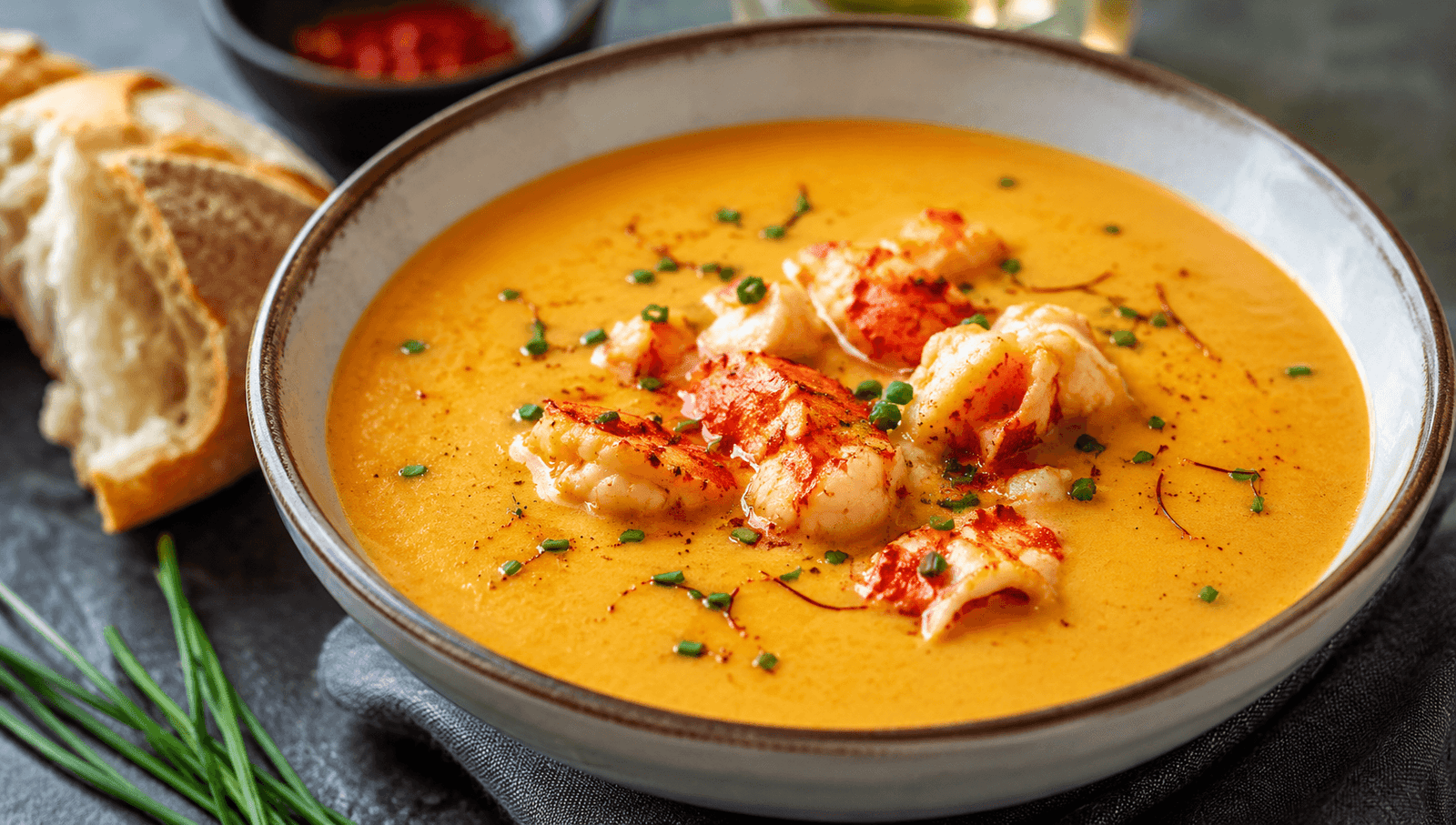
Lobster Bisque Recipe with Saffron
Ingredients
Equipment
Method
- Boil whole lobsters in salted water for 8-10 minutes until shells turn bright red
- Remove meat and reserve all shells
- Sauté shells with onions, carrots, celery, and garlic until vegetables soften
- Deglaze with brandy, scraping the pot bottom
- Add white wine and simmer until reduced by half
- Add tomato paste and seafood stock, then simmer 45-60 minutes
- Strain through fine mesh sieve, pressing solids to extract all liquid
Notes
- Fresh lobster delivers the best flavour, but frozen lobster can be used if fully thawed.
- Always steep saffron in warm water before adding it to the bisque to release its colour and aroma.
- For the smoothest texture, blend the strained soup before adding the lobster meat.
- Avoid boiling after adding the cream, as this may cause the bisque to separate.
Why These Specific Ingredients Work Together
Each ingredient serves a clear purpose. The mirepoix (onion, carrot, celery) creates the aromatic foundation that French cooking depends on. Brandy and white wine add complexity through alcohol-soluble flavor compounds that water cannot extract. Tomato paste provides concentrated lycopene and umami that deepens the savory profile. Heavy cream at 36-40% fat creates the signature velvety texture without becoming greasy.
What Makes This Recipe Different from Ordinary Bisque
As a Chef I notied that the secret lies in two key elements: the saffron infusion and the homemade lobster stock.
The Saffron Infusion Technique Matters
Many recipes get the saffron step wrong. You should never simply add saffron threads directly to hot soup.
Instead, steep the saffron in a tablespoon of warm water before adding it to the bisque. This releases crocin and safranal, the compounds responsible for saffron’s colour, aroma, and many of its beneficial properties.
Saffron contains powerful antioxidants including carotenoids and terpenes. Research shows these compounds help fight inflammation and oxidative stress in your body. The anti-inflammatory properties may support brain health, heart health, and even help with mood regulation. When you steep saffron properly, you extract maximum benefit.
Lobster Stock from Scratch Creates Deep Flavor
The difference between good bisque and exquisite bisque comes down to the stock. You must use the lobster shells to make your own stock. This is non-negotiable if you want restaurant-quality results.
Step-by-Step Cooking Instructions
Patience and respect for the ingredients will always reward you with a silky, restaurant worthy lobster bisque. Follow these instructions carefully to achieve the perfect result.
Step 1: Prepare the Lobsters Properly
Bring a large pot of salted water to boil. Add lobsters and cook for 8-10 minutes until shells turn bright red. Remove with tongs and plunge into cold water to stop cooking.
When cool enough to handle, twist off heads and large claws. Remove meat from tails and claws, cutting into bite-sized pieces. Reserve all shells – do not discard anything. Discard the feathery “dead man’s fingers” and the grey-green tomalley (lobster liver), but keep any roe.
Step 2: Make the Saffron Infusion
In a small bowl, steep saffron threads in one tablespoon of warm water. Let it sit for 10 minutes. The water will turn golden yellow as crocin releases. Set this aside – you will add it near the end of cooking.
Step 3: Build the Lobster Stock
In a large stockpot, melt butter over medium heat. Add lobster shells, onions, carrots, celery, and garlic. Sauté until vegetables soften, about 5 minutes.
Pour in brandy and scrape the pot bottom to deglaze. Add white wine and simmer until liquid reduces by half. Stir in tomato paste, then add seafood stock.
Bring to boil, then reduce heat and simmer 45-60 minutes. This slow simmer extracts maximum flavor from shells.
Step 4: Strain and Finish the Bisque
Strain stock through fine mesh sieve. Press on solids to extract all liquid, then discard solids. Return strained stock to pot.
Stir in saffron infusion and chopped lobster meat. Pour in heavy cream and simmer 15-20 minutes. Season with salt and white pepper to taste.
For truly smooth texture, use immersion blender or transfer to blender and blend until velvety. Do not overblend or cream may separate.
Step 5: Serve with Proper Garnish
Ladle bisque into warmed bowls. Garnish with fresh chopped chives. Serve hot with crusty sourdough bread on the side.
In professional kitchens, the biggest mistake I have seen is rushing seafood soups.
Lobster bisque needs patience. The stock must be respected, not rushed. The saffron must be infused, not dumped. And the cream must be handled gently, not boiled aggressively.
If you follow these rules, the result is consistently restaurant-level.
Health Benefits: Why This Bisque Is More Than Just Indulgent
Lobster may taste luxurious, but it is surprisingly nutrient-dense. A 3-ounce portion contains approximately 90 calories, 19 grams of protein, 1 gram of fat, and zero carbohydrates. This makes lobster excellent for low-carb, keto, or high-protein diets.
Key nutrients in lobster include:
- Selenium: 219 micrograms per 100g (398% of daily value) – powerful antioxidant
- Protein: 28 grams per 6-ounce serving for muscle building and repair
- Omega-3 fatty acids: 0.14-0.92 grams per 6oz for heart and brain health
- Vitamin B12: 88% of daily requirement per 6oz for nerve function
- Copper: 172% of daily value for iron absorption and energy production
- Zinc: Supports immune system function
- Phosphorus: 39% of daily requirement for bone strength
Saffron Health Benefits
Saffron is high in antioxidants and anti-inflammatory compounds. The key active compounds include crocin, crocetin, and safranal.
Research-backed benefits of saffron:
- Brain health: Antioxidants may protect against Alzheimer’s and Parkinson’s disease
- Mood improvement: May reduce depression and anxiety symptoms
- Heart health: Crocetin reduces bad cholesterol and inflammation
- Anti-inflammatory: Fights cytokines that cause chronic inflammation
- Weight management: May boost metabolism and decrease inflammation
- Eye health: Anti-inflammatory properties may help prevent eye diseases
- PMS relief: Reduces negative symptoms of premenstrual syndrome
When you combine lobster and saffron, you get a dish that is both indulgent and genuinely nutritious.
Can You Use Frozen Lobster?
Yes, you can use frozen lobster for bisque recipe, but fresh is better. If using frozen, thaw completely in refrigerator overnight before cooking. Frozen lobster meat may be slightly less tender, but the stock quality will remain good if you use the shells properly.
For best results, buy live lobsters from a seafood market. If that is not possible, frozen lobster tails work well for the meat portion, but you will still need shells for stock – ask your fishmonger for frozen lobster shells.
Storage and Reheating Instructions
Lobster bisque keeps well in refrigerator for up to 3 days. Store in airtight container. The cream may separate slightly when cold, this is normal.
To reheat, warm gently over low heat while stirring. Do not boil or cream may curdle. If bisque is too thick after storage, add a splash of stock or cream to restore consistency.
You can freeze bisque for up to 2 months, but texture may change slightly due to cream. Thaw in refrigerator overnight before reheating.
Cost Breakdown: Is This Recipe Worth It?
Making this exquisite lobster bisque at home costs significantly less than ordering from a restaurant. A restaurant serving typically costs $25-45 per bowl. Making it at home costs approximately $15-25 per serving depending on lobster prices.
Maine lobster prices vary by season but typically range $15-25 per pound. Saffron threads are expensive upfront ($5-15 for small amount) but last for multiple recipes. Heavy cream, wine, and other ingredients are standard pantry items.
The investment pays off when you consider you get 6-8 servings from 2 lobsters. Plus, you control ingredient quality and avoid preservatives found in store-bought versions.
Common Mistakes to Avoid & Wine Pairing Guide
As a chef, I have learned that even small mistakes in technique or pairing can completely change the balance, texture, and overall elegance of a lobster bisque.
Common Mistakes to Avoid
- Skipping homemade stock, which removes the deep seafood flavour essential for a proper bisque
- Adding saffron directly into boiling soup instead of steeping it first in warm water
- Overcooking lobster meat, making it rubbery and dry
- Using black pepper instead of white pepper, which leaves unwanted dark specks in the dish
- Not straining properly, resulting in a gritty, less refined texture
Wine Pairing Recommendations
- Sauvignon Blanc: balances the richness with bright acidity
- Unoaked Chardonnay: complements the creamy, velvety texture
- Viognier: enhances floral and saffron notes
- Champagne: classic luxury pairing for seafood dishes
- Avoid red wine: its tannins clash with cream and delicate lobster flavour
FAQ: Quick Answers to Common Questions
Here are common Questions or quries which we think when we made them.
What is the best way to infuse saffron in lobster bisque?
Steep saffron threads in one tablespoon of warm water for 10 minutes before adding to soup.
How long do you boil lobster for bisque stock?
Boil whole lobsters for 8-10 minutes until shells turn red, then make stock from shells for 45-60 minutes.
Can I use frozen lobster for bisque recipe?
Yes, thaw completely in refrigerator overnight. Frozen works but fresh is slightly better for texture.
What wine pairs with lobster bisque and saffron?
Dry white wine like Sauvignon Blanc complements the creamy, floral flavors best.
Is lobster bisque with saffron healthy?
Yes, lobster provides 19g protein per 100g with omega-3, selenium, and B12. Saffron adds antioxidants and anti-inflammatory compounds.
How to make lobster bisque smoother velvety texture?
Use an immersion blender or regular blender after straining. Add heavy cream at the end and simmer gently.
Why You Should Make This Tonight
This exquisite lobster bisque with saffron infusion delivers everything you want in a special meal. It looks impressive, tastes luxurious, and actually provides real nutritional benefits. The recipe is straightforward if you follow the steps carefully.
Whether you are cooking for a special occasion, impressing guests, or simply treating yourself, this bisque delivers. The health benefits from lobster protein, omega-3s, and saffron antioxidants make it a choice you can feel good about. Now you have everything you need to make it successfully.
