

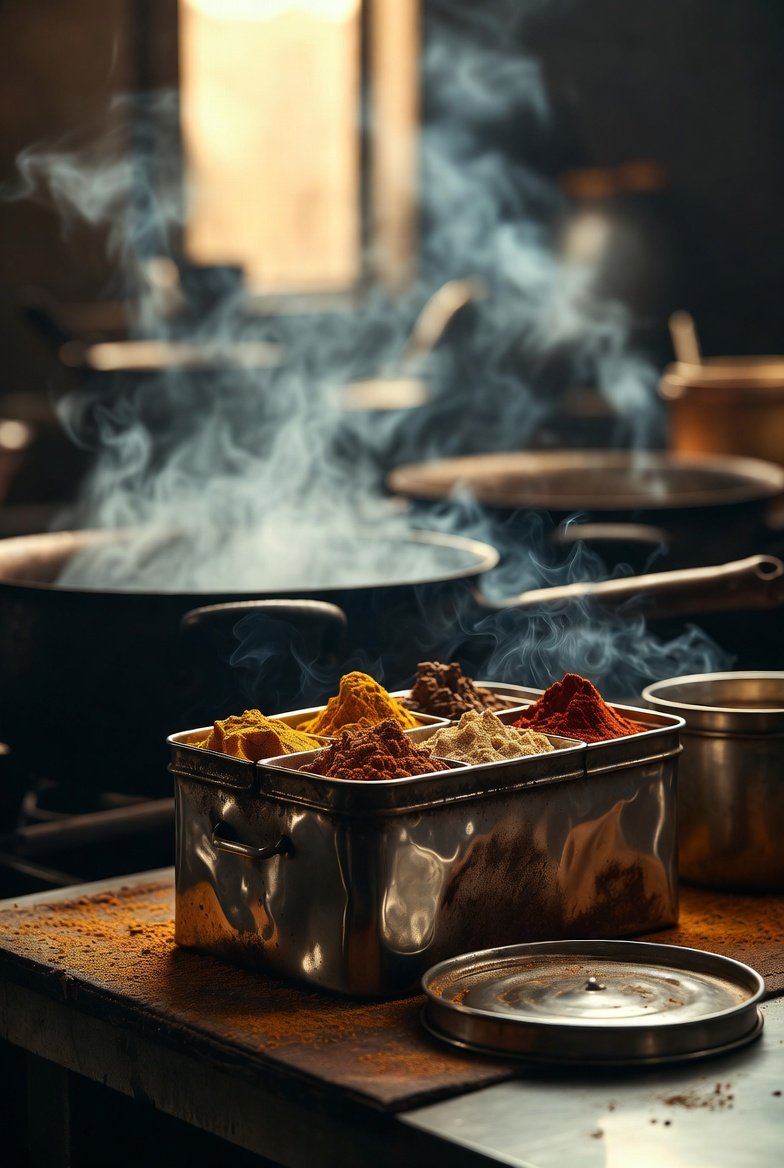
I was sitting in my Restaurant kitchen and I was thinking about my Momi’s masala dabba.
That old, dented steel tin. The one with seven little compartments, each one stained a different color, turmeric yellow, chili red, coriander brown. She had it at least 20 years old for as long as I can remember.
In Pakistani home cooking, that masala dabba isn’t just a spice box. It is basically family history.
When I first moved out and tried to cook on my own, I genuinely thought I could just copy what she did. Add some zeera. Throw in the Chilli/mirch. Stir it around. Done.
My first karahi tasted like sadness.
It took me almost 1 years of actual kitchen failures, burnt masalas, watery gravies, that one horrifying Eid when my Chicken biryani came out like khichdi, to figure out what she was actually doing.
These are the 5 spice techniques from Pakistani home cooking that completely transformed the way I cook today.
1. Bhoonna (Dry Roasting)
I skipped this step for years. I thought it was extra. Why toast spices when you’re just going to cook them again anyway?
Then I actually tried it. And I understood.
What bhoonna does
When you dry roast whole spices like cumin (zeera), coriander seeds (dhaniya), fenugreek (methi daana), peppercorns, something called the Maillard reaction kicks in. The heat activates volatile aromatic compounds that are just sitting there, dormant, in the raw spice. The oils wake up. The aroma changes completely.
Raw cumin smells sharp. Toasted cumin smells deep. Nutty. A little smoky. It smells like it means business.
“I went too far once. Got distracted, fenugreek went dark brown, the whole batch turned bitter. Methi is particularly unforgiving, it’s already slightly bitter raw, and overcooking it makes it taste like you accidentally added soap.”
How to Do It Right
- Use a dry pan: no oil, no water, nothing
- Low to medium heat only: these are small seeds, they burn fast
- Keep moving them: don’t walk away, don’t check your phone
- Watch for color change and smell the shift: from raw to nutty is the target
- Remove immediately when done: the hot pan keeps cooking them even off the flame
- Cool completely before grinding
When to Use It
Bhoonna is for when you’re making your own spice blends, your own garam masala, your own chaat masala, your own biryani masala. It’s not something you do every time you cook. But when you do it, the difference in your homemade spice blend versus a store bought packet is night and day.
2. Tarka / Tempering (Chaunk / Baghaar)
Tarka is the technique of briefly frying whole spices (and sometimes garlic, dried chilies, curry leaves) in very hot fat like oil or ghee to extract their fat-soluble compounds. These compounds terpenes, phenols, and essential oils—are not soluble in water; they release their flavors only into fat. This fat then carries the flavor to every part of your dish.h.
This is why dal cooked in plain water and then finished with a tarka of cumin and garlic in ghee tastes infinitely better than dal with the same spices just boiled in. The technique matters, not just the ingredients.
The temperature matters
Tarka fat should be around 180–200°C. Too cool and the spices just absorb oil and get greasy. Too hot and they burn in seconds. The visual test: a wooden spoon dipped in should show small, steady bubbles. If it’s smoking aggressively, it’s too hot.
My observation on regional differences
Pakistani tarka and South Indian tadka use the same concept but very different spices. Pakistani tarka is usually cumin seeds, garlic, sometimes dried red chilies. South Indian tadka almost always includes mustard seeds (rai), curry leaves (kadi patta), and dried red chilies and mustard seeds are the priority. You hear them pop first, then everything else follows. Different sound, different flavor, same beautiful logic.
Tarka Sequence (Don’t Mix This Up)
- Heat ghee or oil until properly hot
- Add whole hard spices first: cumin, mustard seeds, cloves, cardamom
- Wait for the sputtering and popping: this is them releasing flavor
- Add garlic if using: it should sizzle immediately
- Add curry leaves or dried chilies last: they splatter violently, be careful
- Pour over your finished dish immediately: don’t let it sit and overcook
“The first time I added curry leaves to hot oil, I wasn’t ready for how dramatically they’d splatter. I jumped back, oil hit my wrist, I said some words I won’t repeat here. ”
Use a lid to partially cover the pan when the curry leaves go in. Learn from my pain.
3. Bhunai (Slow-Frying with Onion)
Bhunai is the process of slow frying onions and masala together in oil/ghee until they form a deeply colored, intensely flavored base. Not a quick stir. Not a minute or two. We’re talking 10–25 minutes on low medium heat.
When onions cook slowly, they caramelize. Their natural sugars break down into complex compounds that taste nothing like raw onion. They become sweet, deep, almost savory. That’s the foundation of a karahi, a korma, a qorma anything with a real gravy.
The science of Bhunai
Slow caramelization creates hundreds of new flavor compounds that simply cannot form at high heat. Rushing with a high flame just steams and softens the onion. You get pale, flabby onions and a thin masala.
Patient low heat = deep color, complex flavor, and that sticky-rich gravy texture
What Mistake I did in My Learning?
For the longest time I thought my karahi wasn’t masaledar enough because I wasn’t adding enough spice. So I’d add more red chili, more zeera, more everything. Still tasted flat. The problem wasn’t the amount of spice. It was that I was rushing the bhunai. I wasn’t giving the onion and masala enough time to actually merge and deepen.
When you slow-fry properly, you’ll see the oil separate from the masala around the edges of the pan. This is called “oil releasing” and it’s your signal that bhunai is done. The masala has given up all its water content. Now it will actually coat and penetrate whatever you add next.
My Guide to Bhunai Progress
| Stage | Color | Smell | Texture | Time |
| Raw | White/cream | Sharp onion | Crunchy | 0 min |
| Softened | Pale yellow | Milder | Limp | 5–7 min |
| Turning | Golden | Sweet | Starting to shrink | 10–12 min |
| Ready | Deep golden-brown | Nutty, sweet, complex | Almost melted | 12–20 min |
| Overcooked | Dark brown/black | Bitter | Crispy, harsh | Avoid |
4. Blooming in Liquid (Masala Slurry in Dahi or Pani)
For years in my home and learning, I did add dry ground masala directly to the hot pan. Turmeric straight from the spoon. Red chili powder scattered over bubbling oil. Coriander powder dumped in.
And then I did see lumps of uncooked spice floating around, or patches of burnt powder because some of it hit the hot oil directly and scorched before I could stir.
The fix is simple: mix your ground spices into a liquid like dahi (yogurt), a splash of water, even a bit of tomato pulp before adding them to the pan. This creates an even slurry that distributes uniformly across the heat instead of landing in hot spots and burning.
This technique is especially important for:
- Yogurt-based gravies (korma, dahi gosht): marinating meat in dahi + spices means even absorption
- Anything with turmeric: haldi is bitter and uneven if not properly dispersed
- Biryani marination: meat gets a uniform spice coat when mixed in liquid first
The science Masala Slurry
Ground spices are powders. They don’t distribute evenly in hot fat on their own. A liquid medium creates a suspension where every particle is evenly spread before heat application. You get a more consistent flavor throughout the dish.
My Blooming Guide by Spice
| Spice | Best Liquid to Bloom In | Why |
| Turmeric (Haldi) | Water or dahi | Prevents bitter raw patches |
| Red Chili Powder | Oil or dahi | Color activates better in fat |
| Coriander Powder | Water | Prevents clumping |
| Saffron (Zafran) | Warm milk or water | Essential — releases color and aroma |
| Garam Masala | Dahi or end-of-cook liquid | Gentle heat preserves volatiles |
This is the one my Late Mom explained and always practiced.
She had added whole spices at the very beginning, cinnamon stick, cardamom pods, cloves, bay leaf when the oil was hottest. Then ground spices with the onions midway through. Then garam masala near the end. Fresh coriander or mint at the very last second, off the flame.
Each spice has a different heat tolerance. A different moment when it gives its best.
My Mom/Ammi’s actual rule, verbatim:
“Garam masala end mein dalna hai. Pehle dala toh udd jata hai.” (Add garam masala at the end. Added early and it flies away.)
She was right. Garam masala contains highly volatile aromatic compounds cardamom, cloves, cinnamon, black pepper. High heat destroys them quickly. If you add garam masala at the start, by the time the dish is done cooking, those delicate aromatics are completely gone. You’re left with the bitter undertone without the floral warmth.
Different spices burn at different temperatures. Whole hard spices like cardamom, cloves, cinnamon can handle the hottest oil at the start. Ground spices need medium heat and moisture. Delicate aromatics like garam masala, kasuri methi, or fresh herbs need either very low heat or no heat at all.
The Layering Timeline
START (Hot oil, 180–200°C)
↓ Whole hard spices: cardamom, cloves, cinnamon, bay leaf, cumin seeds
EARLY MIDDLE (Medium heat, onions softening)
↓ Aromatics: ginger-garlic paste
↓ Let raw smell cook out
MIDDLE (After onions golden, add tomatoes if using)
↓ Ground spices: turmeric, red chili, coriander powder
↓ Bhuno until oil separates
LATE (Dish nearly done, last 5 minutes)
↓ Garam masala
↓ Kasuri methi (crushed between palms)
FINISH (Off the flame or immediately before serving)
↓ Fresh coriander, mint, green chilies
↓ Squeeze of lemon if needed
- If you add garam masala at the start, it dies.
- If you add fresh coriander or Dhaniya powder too early, it wilts and turns dark and tastes cooked and dull. If you add whole spices at the end, they’re still raw and hard and unpleasant to bite into.
Everything has a moment.
FAQ: The Things You Actually Want to Know
Almost always because they burned. Ground spices especially go bitter very fast on high heat. Add them on medium heat, stir constantly, and add a small splash of water if the pan gets too dry. Whole spices burn too and watch the tarka carefully, it only needs 30–60 seconds.
Both, at different stages. Whole spices go in first — they can handle hot fat and need time to release. Ground spices go in the middle, they need moisture and medium heat. You lose freshness and potency with pre-ground, so grind your own when you can, even if it’s just zeera and dhaniya.
Airtight containers, away from heat and light. Not above the stove — the steam and heat from cooking damages them over time. Whole spices last 2–3 years. Ground spices are best within 6 months. Simple freshness test: open the jar and smell it. If it doesn’t smell like much, it’s done.
Yes, but I would not. Used tarka oil has already given a lot of its flavor. It can also go rancid faster, especially if you’ve used it at very high temperatures. Fresh fat, fresh tarka, fresh flavor.
A few reasons. They bhuno for longer, restaurants have high powered burners and they don’t rush the bhunai. They often freshly roast and grind their own spices. And they use significantly more fat than home recipes suggest, which carries the flavor everywhere. Also, commercial kitchens layer constantly, there’s always something building on something else.
Whole spices → hot fat → aromatics (ginger-garlic) → ground spices → protein → garam masala at end → fresh herbs at finish. That’s the general sequence. Every dish tweaks it slightly, but the logic stays the same.
Closing: Eight Years, One Masala Dabba
I’m still not as good as Mom. I don’t think I ever will be, honestly. She has 30 years on me.
But I understand now why her food tastes the way it does. It is not magic. It is not a secret ingredient. It’s technique built slowly, corrected through failure, refined through repetition.
You’re not going to master all five techniques in one cook. Pick one this week. Maybe just try dry roasting your zeera before grinding. See if you notice the difference. I’m willing to bet you will.
