

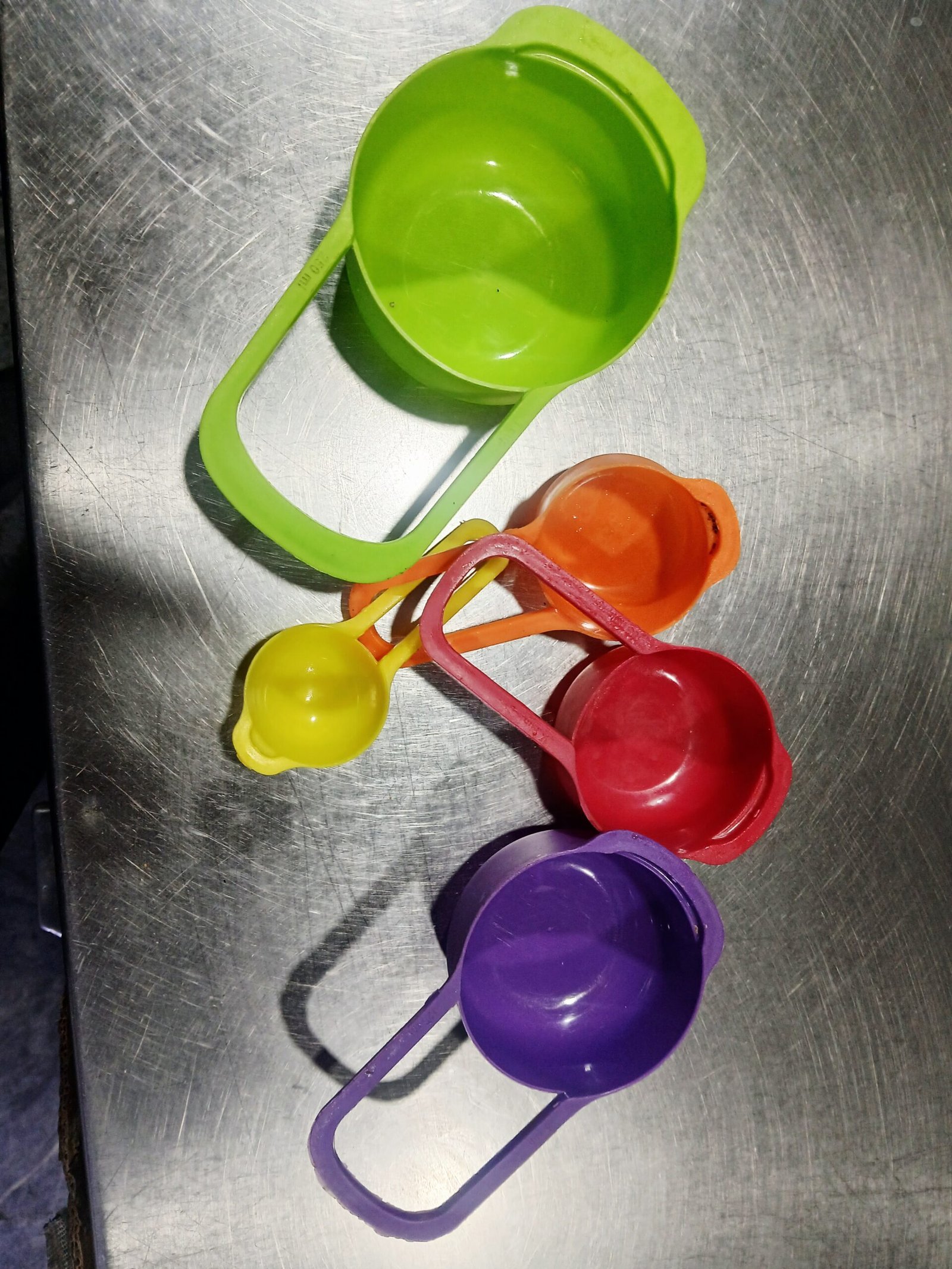
There are exactly 8 tablespoons in 1/2 cup. One cup equals 16 tablespoons, so half equals 8 tablespoons. But here’s what 99% of chefs won’t tell you that this changes depending on which country’s recipe you’re following.
Here is the Real Story Most Cooks Miss
I worked 8 years in multi-cuisine kitchens, including as a sales chef at UFS (Unilever Food Solution). I have seen recipes fail because people didn’t know US tablespoons differ from UK and Australian tablespoons.
| Country | 1 Tablespoon Volume | Tablespoons in 1/2 Cup |
| US | 14.79 mL (≈15 mL) | 8 tbsp |
| UK | 15 mL | 8 tbsp (nearly same) |
| Australia | 20 mL | 6 tbsp only |
| Metric cup system | 250 mL per cup | 6.25 tbsp |
Critical difference: Australian tablespoons are 33% larger than US tablespoons. If you follow an Australian recipe with US spoons using 8 tablespoons, your dish will have 33% too much liquid.
US vs UK vs Australia: Why This Matters
Here’s the answer,
- US Cup = 240 mL
- UK Cup = 250 mL
- Australian Cup = 250 mL
The cup size differs by 10 mL between the US and UK/Australia. That’s 4% difference per cup is negligible for soups, devastating for macarons or bread dough.
The imperial (UK) pint is 20 fl oz, while the US pint is only 16 fl oz. That’s 20% larger. This is why British recipes sometimes fail in American kitchens.
Here’s the chart Complete Conversion Chart
| Cup Fraction | Tablespoons (US) | Fluid Ounces | Milliliters | Grams (Flour)* |
| 1/8 cup | 2 tbsp | 1 oz | 30 mL | 15 g |
| 1/6 cup | 2 tbsp + 2 tsp | 1.33 oz | 40 mL | 20 g |
| 1/4 cup | 4 tbsp | 2 oz | 60 mL | 30 g |
| 1/3 cup | 5 tbsp + 1 tsp | 2.67 oz | 80 mL | 40 g |
| 1/2 cup | 8 tbsp | 4 oz | 118 mL | 60 g |
| 2/3 cup | 10 tbsp + 2 tsp | 5.33 oz | 158 mL | 80 g |
| 3/4 cup | 12 tbsp | 6 oz | 177 mL | 90 g |
| 1 cup | 16 tbsp | 8 oz | 237 mL | 120 g |
Flour weight varies by how you pack it. These are spoon-and-level measurements.
Why 8 Tablespoons Isn’t Always 8 Tablespoons
Because the Density matters. One tablespoon of water weighs 15g and one tablespoon of flour weighs only 7.5g. One tablespoon of honey weighs 21g.
When a recipe says “1/2 cup sugar,” it means:
- Volume: 118 mL (8 tablespoons)
- Weight: 100g granulated sugar, 120g brown sugar (packed)
When a recipe says “1/2 cup flour,” it means:
- Volume: 118 mL (8 tablespoons)
- Weight: 60g (spooned), 75g (scooped directly from bag)
This 25% weight difference is why your cakes turn out dense. You’re actually using 25% more flour than the recipe intended.
Professional Kitchen Mistakes I See Daily
I see daily in the kitchen some mistakes which starter make in their learning stage.
Mistake #1: Using Eating Spoons
A dinner spoon holds 15-20 mL, not 14.79 mL. That’s 2-35% error per spoon. Over 8 spoons, that’s catastrophic.
Mistake #2: Heaping vs Level
A heaping tablespoon can hold 50% more than a level one. Professional recipes always mean level tablespoons unless specified.
Mistake #3: Scooping Flour Directly
When you scoop flour with the measuring cup, you pack it down. You get 120% of the intended amount. Always spoon flour into the cup, then level with a knife.
Mistake #4: Ignoring Temperature
Cold butter doesn’t measure the same as room-temperature butter. Liquids expand when warm. This is why professional bakers use grams, not cups.
Mistake #5: Following Recipes Too Rigidly
Professional chefs adjust for altitude, humidity, and ingredient quality. At 5,000+ feet elevation, you need less liquid. In humid weather, flour absorbs more moisture.
FAQ: Questions People Ask
How many tablespoons are in half a cup exactly?
Exactly 8 tablespoons (US measurement). This is precise, not approximate.
Is 8 tablespoons really equal to 1/2 cup?
Yes, 8 tablespoons = 1/2 cup = 4 fluid ounces = 118 milliliters. This is standard US customary units.
What if I don’t have a 1/2 cup measuring cup?
Use 8 level tablespoons. Fill each tablespoon completely, then level with a straight edge. Do not heap.
How many tablespoons in 1/2 cup of flour specifically?
Still 8 tablespoons by volume. But by weight, it’s only 60g, not 100g like sugar.
Does 16 tablespoons make 1 whole cup?
Yes, exactly 16 tablespoons = 1 cup. This is the foundation of US volume measurement.
How many tablespoons in 1/2 cup of butter?
8 tablespoons. In fact, 1 stick of butter = 1/2 cup = 8 tablespoons = 113 grams.
What is half of 1/2 cup in tablespoons?
Half of 1/2 cup = 1/4 cup = 4 tablespoons.
How many teaspoons in 1/2 cup?
24 teaspoons. (1 tablespoon = 3 teaspoons, so 8 × 3 = 24).
Is a US tablespoon different from a UK tablespoon?
Slightly. US = 14.79 mL, UK = 15 mL. The difference is 0.21 mL (1.4%), negligible for most recipes.
Why do Australian recipes use different tablespoons?
Australia uses metric standardization. Their tablespoon is 20 mL (33% larger than US). You need only 6 Australian tablespoons for 1/2 metric cup.
When Precision Actually Matters
Critical Precision (Use Grams)
- Macarons, soufflés, meringues
- Bread dough (yeast ratios)
- Custards, crème brûlée
- Caramel, candy making
- Emulsions (mayonnaise, hollandaise)
Moderate Precision (Cups OK)
- Cakes, cookies, quick breads
- Sauces, gravies
- Marinades, dressings
- Rice, quinoa
Low Precision (Estimates Work)
- Stir-fries, sautés
- Soups, stews
- Curries, braises
- Grilled meats
Here is the Besic Formula
Remember this simple equation
1 cup = 16 tablespoons
tablespoons=cups×16
For any fraction:
Tablespoons = (Numerator ÷ Denominator) × 16
| Cups | Calculation | Tablespoons | Practical Measure |
| 1/4 cup | (1 ÷ 4) × 16 | 4 tbsp | 4 tbsp |
| 1/3 cup | (1 ÷ 3) × 16 | 5.333 tbsp | 5 tbsp + 1 tsp |
| 3/4 cup | (3 ÷ 4) × 16 | 12 tbsp | 12 tbsp |
| 1/2 cup | (1 ÷ 2) × 16 | 8 tbsp | 8 tbsp |
| 2/3 cup | (2 ÷ 3) × 16 | 10.666 tbsp | 10 tbsp + 2 tsp |
| 1/8 cup | (1 ÷ 8) × 16 | 2 tbsp | 2 tbsp |
Why Weight Measurements Beat Volume
Professional kitchens use grams, not cups. Here’s why:
| Measurement Type | Accuracy | Consistency | Speed |
| Volume (cups/tbsp) | 85% | Variable | Fast |
| Weight (grams) | 99% | Perfect | Slower |
A digital kitchen scale costs Rs. 2,000-4,000 in Pakistan and in the UK €16,45 and in USA $13 and eliminates guesswork forever. This is why every professional recipe I have worked with includes gram measurements.
Final Truth from 8 Years in Professional Kitchens
8 tablespoons = 1/2 cup is correct for US recipes. But understanding why this matters and when it doesn’t apply is what separates home cooks from professionals.
The difference between a dry cake and a perfect one is often 2 tablespoons of flour. That’s 25% more weight when you scoop vs. spoon. That’s why spoon-and-level matters. And, that’s why weight measurements are superior. That’s why country of origin matters when following recipes.
More Cooking Resources
- How Many Tablespoons in a Cup?
- How Many Teaspoons in a Tablespoon?
- How Many Cups in a Quart, Pint, and Gallon?
- How Many Tablespoons in 2/3 Cup?
- How many tablespoons in 1/3 cup?
- Grams to Cups Conversion for Baking
Keep this guide of Bunch way in your kitchen. When in doubt, buy a digital scale. Your cooking will improve immediately.
