

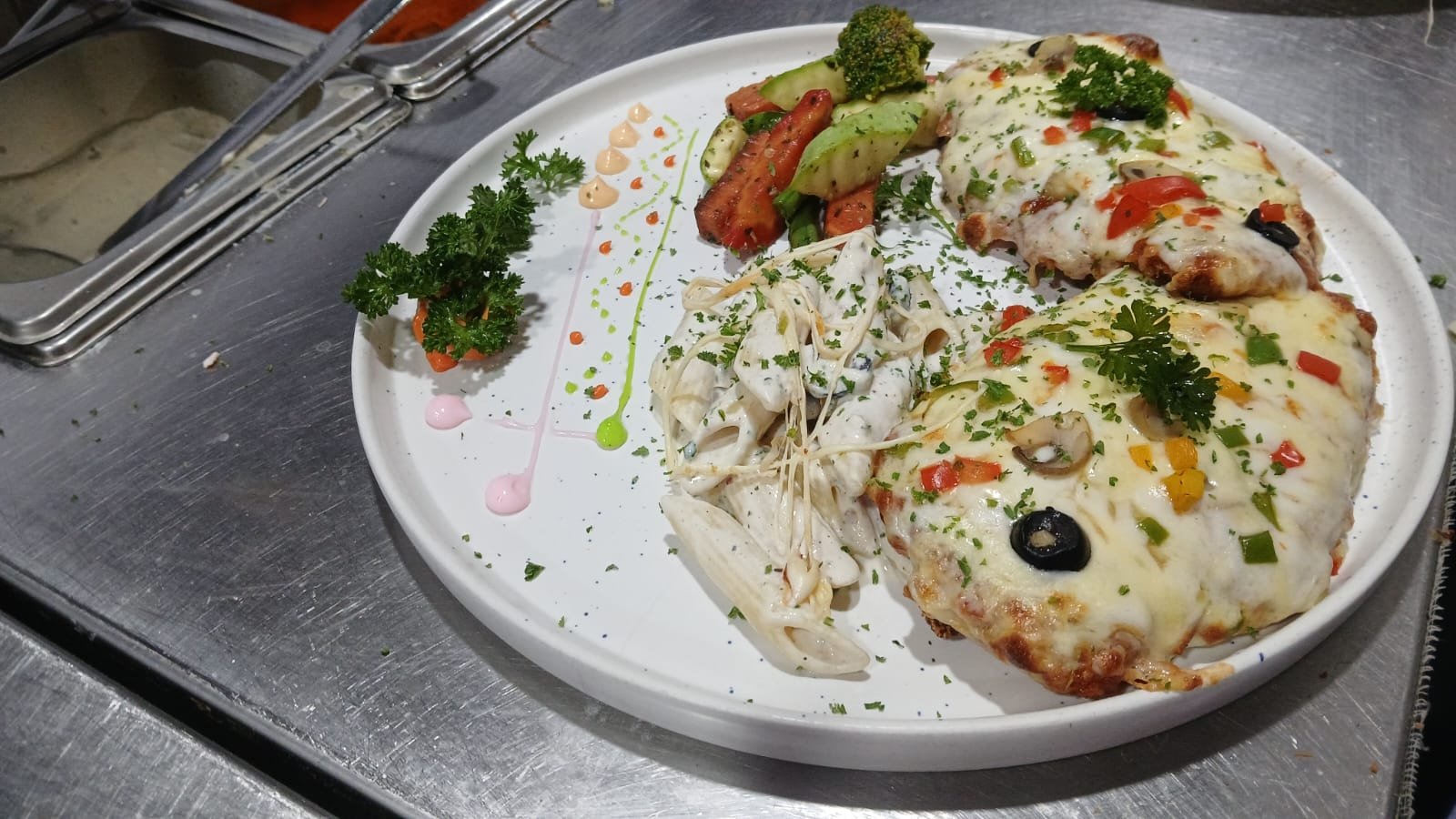
For many food lovers, continental food first appeared at weddings, hotel buffets, or those fancy restaurants where sizzling steak arrived with mashed potatoes and sautéed vegetables. But real continental cuisine is much deeper than “white sauce pasta” or grilled chicken.
Continental food is not just a food category, but a complete cooking philosophy. Here, flavor is not created by overloading, but through perfect balance. Every ingredient is allowed to speak in its own voice, without being buried under heavy masalas.
The real charm of this cuisine lies in its simplicity and impeccable technique.
Unlike bold desi flavors that hit you all at once. Continental food does not rush at your tongue; it arrives in layers. A tomato sauce tastes like tomato, not a dozen spices fighting for space. A grilled chicken breast tastes like chicken first, then garlic, then herbs, then butter. Its taste is mild, balanced, and ingredient forward, with herbs doing much of the work.
Whether you’re a home cook curious about European flavors, a restaurant owner trying to build a continental menu, or simply someone who wants to understand why that pasta on your plate tastes the way it does, this is for you.
What Is Continental Food? (And Why Everyone Gets It Wrong)

The term continental refers to the cuisines of mainland Europe, specifically the culinary traditions of France, Italy, Spain, Germany, Belgium, Austria, USA and the broader Mediterranean region and Swiss cooking. Historically, the word “continent” was used by the British to refer to Europe across the Channel, and “continental breakfast” or “continental food” simply meant the food people ate over there.
Continental cuisine covers the cooking traditions of Europe. In hotels and restaurants across Pakistan and South Asia, “Continental” also means American and British food. So that is how we use it here.
Unlike Chinese or Thai food, Continental cooking does not depend on a wok or high heat. It depends on patience. A good Bolognese sauce needs three hours. A proper beef stock takes six. French cooking especially rewards people who slow down.
Today, especially in South Asia and the Middle East, the term has evolved into a catch-all for European-style cooking. When a Pakistani restaurant in Lahore, Faisalabad or in the USA a café in Providence lists “continental food” on its menu, they mean dishes inspired by French, Italian, and Mediterranean traditions: grilled meats, cream pastas, herb roasted chicken, and the like.
The History Behind the Plate: Where Continental Cuisine Comes From
Every great dish has a story. Continental food has a whole civilization behind it.
The roots go back to ancient Greece and Rome, where cooks already understood the power of olive oil, fresh herbs, and quality wine. But the real turning point came in the 17th century, when French haute cuisine, literally “high cooking” , began to formalize the art of European cooking.
Chefs like Marie-Antoine Carême and later Auguste Escoffier didn’t just cook. They systemized. Escoffier gave us the brigade kitchen system, the very model still used in restaurants worldwide, including mine. He codified the five French mother sauces: béchamel, velouté, espagnole, hollandaise, and tomato sauce. These aren’t just recipes. They are the grammar of continental cooking.
As trade expanded and European grand hotels spread across the world in the 19th and 20th centuries, continental cuisine traveled with them. It became the language of fine dining, of sophistication, of the plate as a canvas.
And when those trains and ships carried their chefs and their spice boxes and wine casks continental food crossed every border on earth.
Key Characteristics of Continental Food: What Makes It Different
In my kitchen, I always tell my cooks: “You can taste technique.” Continental food proves that every single time.
Here’s what sets it apart from other world cuisines:
Fresh, Seasonal, and High-Quality Ingredients
Continental cooking is built on the principle that great food starts before you touch the pan. The French call it mise en place everything in its place, everything at its best. Italian grandmothers have been saying the same thing for centuries: you cannot make a great tomato sauce from bad tomatoes.
Whether it’s the sun ripened cherry tomatoes of Sicily, the butter from Normandy, the saffron from Spain, or the black truffle from Périgord continental cuisine celebrates what is fresh, local, and seasonal.
Technique Over Spice
This is perhaps the biggest difference from South Asian or Southeast Asian cooking. Continental food does not rely on bold, complex spice blends to create flavor. Instead, it relies on cooking technique.
Braising, roasting, sautéing, poaching, reducing these methods coax natural flavors out of ingredients rather than masking them. A continental chef might use just thyme, garlic, and butter to make a chicken taste extraordinary. The spice is not the hero. The technique is.
The Art of the Sauce
Ask any classically trained chef what separates amateur cooking from professional continental cooking, and they will say: sauces.
Continental food, particularly French, is built around sauces. A proper demi glace, a silky hollandaise, a vibrant pistou, these aren’t condiments. They are the soul of the dish. My personal philosophy is that if the sauce is wrong, the entire plate is wrong.
The Course-Based Meal Structure
Continental dining follows a beautiful structure. A meal is not just food, it is an experience with chapters.
| Course | Description |
| Amuse-bouche | A bite-sized appetizer to awaken the palate |
| Hors d’oeuvre / Starter | Light first courses soup, salad, bruschetta |
| Main Course (Entrée) | The centerpiece meat, fish, or pasta |
| Cheese Course | Especially in French tradition |
| Dessert | Pastries, custards, tarts, or sorbet |
| Coffee / Digestif | To close the meal with grace |
This structure is not pretension. It is respect for the diner’s journey.
Wine as a Cooking Ingredient
In continental cooking, wine is not just for the glass. It is for the pan. I deglaze with white wine, I braise with red, I reduce with rosé. Wine adds acidity, depth, and a complexity that no amount of stock can fully replicate. It is one of the defining flavors of continental cuisine.
The Four Pillars of Continental Cooking
Every Continental dish you cook will use at least one of these four elements. Some use all four.
🧈 Fat as Flavor
Butter and olive oil are not just cooking mediums. They are flavors. French cooking leans on butter. Italian and Spanish cooking use olive oil. American cooking uses both. Know which fat belongs to which dish.
🫙 Sauces as Foundation
Every Continental cuisine has mother sauces. Learn the five French mother sauces and you can make thirty derivative sauces without a new recipe. The sauce is the meal proteins and vegetables just carry it.
🌿 Fresh Herbs, Used Right
Thyme, rosemary, tarragon, parsley, basil. Each has a role. Woody herbs (thyme, rosemary) go in early. Delicate herbs (basil, parsley, tarragon) go in at the end or raw. Getting this wrong is the most common mistake home cooks make.
🌡️ Temperature Control
A hollandaise breaks at 70°C. A steak needs 55°C for medium-rare. Pasta water should be 100°C and heavily salted. Continental cooking lives and dies by temperature. A meat thermometer is not optional.
Core Ingredients and Techniques
| Feature | How continental cuisine usually presents it |
|---|---|
| Flavor profile | Mild, balanced, and ingredient-forward, with herbs doing much of the work. |
| Signature ingredients | Olive oil, butter, cream, cheese, wine, garlic, parsley, basil, rosemary, and thyme. |
| Common techniques | Roasting, baking, frying, grilling, and stewing. |
| Familiar dishes | Pasta, salads, sandwiches, fries, grilled meats, soups, and breakfast plates. |
Popular Continental Dishes People Recognize Instantly
Some dishes appear to be easy to understand, easy to cook, and easy to love.
- French toast: bread soaked in egg and milk, then pan-fried and finished with syrup or fruit.
- Caesar salad: romaine lettuce, croutons, and a creamy dressing built with Parmesan, garlic, lemon, and egg.
- French fries: simple, crisp, and impossible to ignore when done right.
- Cheese pizza: minimal spice, lots of cheese, and a comfort-food profile many menus group under continental food.
- Hash browns: fried potatoes with a crisp shell and soft center.
- Pasta, chicken steak, fish steak, macaroni, and grilled chicken: common in recipe indexes and catering menus that label dishes as continental.
- Grilled Chicken Steak: Juicy chicken breast served with pepper sauce, mashed potatoes, and vegetables.
- Pasta Alfredo: Creamy white sauce pasta loaded with butter, garlic, cream, and parmesan cheese.
- Lasagna: Layer upon layer of pasta sheets, meat sauce, béchamel, and melted cheese.
- Beef Steak: A perfectly seared steak with black pepper sauce remains the king of continental fine dining.
- French Onion Soup: Slow-cooked onions, rich broth, toasted bread, and melted cheese. Comfort food at its highest level.
- Ratatouille: A vegetable-based French dish proving continental cuisine is not only about meat.
- Tiramisu: Coffee-soaked dessert layered with mascarpone cheese and cocoa powder. Elegant and unforgettable.
The Five French Mother Sauces (And Why They Matter)
Every Continental sauce you have ever eaten traces back to one of five French mother sauces. Learn these five and you have the keys to Western cooking.
Auguste Escoffier, the chef who organized modern French cooking, codified the mother sauces in the early 1900s. Before that, every cook kept them in their head. Escoffier wrote them down so that any kitchen could reproduce them. A hundred years later, they still work the same way.
Every continental cook whether trained or self-taught should understand these five fundamental sauces.
| Mother Sauce | Base | How It’s Made | Key Derivatives | Use It On |
| Béchamel | Milk + White Roux | Butter + flour cooked together, milk whisked in slowly over medium heat until thick | Mornay (cheese), Soubise (onion), Cream Sauce | Lasagna, croque monsieur, gratins, mac & cheese base |
| Velouté | Chicken/Fish/Veal Stock + Blonde Roux | Same as béchamel but stock replaces milk lighter in color and flavor | Suprême (cream), Allemande (egg yolk), Vin Blanc | Chicken dishes, fish, white meats |
| Espagnole | Brown Stock + Dark Roux | Roasted bones, mirepoix, tomato paste, dark roux simmered 4-6 hours | Demi-glace, Bordelaise (wine), Chasseur (mushroom) | Beef, lamb, game meats, rich stews |
| Hollandaise | Egg Yolks + Clarified Butter | Egg yolks whisked over barely simmering water, butter added slowly an emulsion sauce | Béarnaise (tarragon), Maltaise (blood orange), Choron (tomato) | Eggs Benedict, asparagus, fish, steaks |
| Tomato Sauce | Tomatoes + Pork Stock | Tomatoes cooked down with pork fat and aromatics into a rich sauce | Provençale (olives, capers), Creole, Spanish | Pasta, pizza, braised dishes, dipping |
Which Sauce to Learn First
Start with béchamel. It is the most forgiving and the most useful for home cooks. You can make it in 10 minutes. Once you know it, you can make lasagna, mac and cheese, croque monsieur, and a dozen other dishes without looking at a recipe.
Master these five, and you hold the keys to continental cooking. Every elegant dish in a French restaurant traces back to one of these foundations.
Essential Continental Cooking Techniques Every Home Cook Should Know
These are the techniques I wish someone had drilled into me before I started cooking Continental food. They are not glamorous. But they are the difference between good food and great food.
Knife Skills: The Foundation of Everything
You cannot cook Continental food without knowing how to use a chef’s knife properly. Not because the recipes demand it, but because bad knife work slows you down, makes cuts uneven, and means your food cooks unevenly. Here are the four cuts you need.
🔪 Julienne
Thin matchstick cuts. 3mm × 3mm × 6cm. Used for vegetables in gratins, salads, and garnishes. Square off the vegetable first, then cut into planks, then cut into sticks.
🎲 Brunoise
Tiny dice. 3mm cubes. Made by dicing julienne strips. Used in refined sauces and soups where texture should be fine and even. Rarely used in home cooking but worth knowing.
🥕 Medium Dice
1.5cm cubes. The most used cut in home cooking. Used for vegetables in stews, soups, and roasted dishes. Learn this one first it appears in 70% of Continental recipes.
🌿 Chiffonade
Thin ribbon strips of leafy herbs or vegetables. Stack the leaves, roll tightly, slice thinly across the roll. Used for basil on pasta, mint in salads, and garnishes.
Cooking Methods That Change Everything
These four methods cover 80% of all Continental cooking. If you understand what each one does and why, you can adapt any recipe on the fly. You do not need a professional kitchen to cook continental food well. You need understanding. Here are the core techniques:
🍳 Sautéing
High heat, small amounts of fat, food moves constantly. From the French “sauter” to jump. Keeps food from steaming. The Maillard reaction, the browning of proteins is your friend. Used for mushrooms, vegetables, and chicken. The pan must be hot before food goes in.
🥩 Pan-Searing
High heat, enough fat to coat the pan, food stays still to build a crust. Used for steaks, chicken breasts, fish fillets. Pat food is completely dry first. Do not move it for the first two minutes.
🫕 Braising
Sear first on high heat. Then add liquid stock, wine and tomatoes to come halfway up the meat. Cover and cook low and slow. Turns tough cuts (brisket, short rib, lamb shoulder) into the most tender food you will ever eat.
🌡️ Deglazing
After searing, pour wine or stock into the hot pan. The liquid lifts the browned bits (the fond) from the bottom. Those bits are pure flavor. This is liquid gold. Never waste it. This is how five minute pan sauces happen.
Reduction
Simmering a liquid down to concentrate flavor and thicken consistency. Patience here pays with every spoonful.
Resting Meat
Always, always rest your meat after cooking. Five minutes minimum. It redistributes the juices and makes a mediocre cook look brilliant.
Seasoning in Layers
Season at every stage of cooking, not just at the end. Salt draws out moisture and builds flavor at each step.
What Every Continental Home Cook Should Know
- Always dry meat before searing
- Season pasta water like the sea
- Cold butter finishes hot sauces
- Let meat rest before cutting
- Taste as you go always
- Mise en place before you light the stove
- Save pasta water every time
- Finish pasta in the sauce pan
- Hollandaise breaks above 70°C
- Cream sauce should never boil
Continental Food vs. Asian Food: Understanding the Difference
This is a question I get asked constantly, especially in South Asian restaurants.
| Feature | Continental Food | Asian Food |
| Origin | Europe (France, Italy, Spain, etc.) | East/Southeast Asia (China, Japan, Korea, Thailand) |
| Primary Fats | Olive oil, butter, cream | Sesame oil, vegetable oil, coconut milk |
| Seasoning Philosophy | Herbs, wine, subtle salt | Soy, fish sauce, chili, bold spices |
| Protein Cooking Style | Roasting, braising, grilling | Stir-frying, steaming, fermenting |
| Meal Structure | Courses (starter, main, dessert) | Often all dishes served together |
| Sauce Style | Reduced, cream-based, mother sauces | Broth-based, fermented, chili-forward |
| Famous Carbs | Pasta, bread, potatoes | Rice, noodles, dumplings |
Neither is better. Both are extraordinary. But understanding this difference helps you cook each one with the respect it deserves.
Continental Breakfast: What It Actually Means
A continental breakfast is a light morning meal rooted in European tradition. It is the opposite of a full English or American breakfast: no sausages, no hash browns, no heavy proteins. Instead:
Classic Continental Breakfast includes:
- Freshly baked croissants, brioche, and bread
- Butter, fruit jams, honey, and cream cheese
- Fresh seasonal fruits
- Yogurt
- Cheese and cold cuts (in Northern European tradition)
- Freshly brewed coffee, espresso, or tea
- Orange juice
In hotels across Pakistan and India, you’ll often find an “enhanced continental breakfast” that includes eggs prepared to order which is a lovely hybrid, perfectly suited to local tastes.
Continental Cuisine vs Everyday Desi Kitchen Cooking
In many South Asian homes, food is built on intensity: the tempering, the chili, the onion base, the long simmer, the deep aroma that fills the whole street. Continental food moves differently. It is cleaner, quieter, and usually more visible on the plate. The sauce does not hide the ingredient; it frames it. The herb does not overpower; it finishes. That is why many Indian and Pakistani food sites explain continental food as lighter in spice and more focused on olive oil, wine, herbs, dairy, and standard European techniques.
Continental Cuisine vs Desi Cuisine
| Continental Cuisine | Desi Cuisine |
| Mild flavors | Bold spicy flavors |
| Herbs-based seasoning | Masala-heavy seasoning |
| Olive oil and butter | Ghee and cooking oil |
| Focus on plating | Focus on quantity |
| Grilling and baking | Frying and slow cooking |
| Creamy sauces | Rich gravies |
How to Cook Continental Food at Home
You do not need a hotel kitchen to cook continental food well. You need discipline.
1) Start with one hero ingredient
Use chicken, fish, pasta, potatoes, mushrooms, or vegetables, then let that ingredient stay visible. Continental cooking works best when the main item is not buried.
2) Keep the seasoning clean
Use salt, black pepper, herbs, garlic, butter, olive oil, and cream with control. The point is to support flavor, not drown it.
3) Respect texture
A good continental plate often has contrast: crisp toast with soft eggs, roasted vegetables with a creamy sauce, or grilled meat with a fresh salad. That contrast is what makes the bite feel complete.
4) Plate like you mean it
Leave space on the plate. Add a green herb finish. Wipe the rim. Continental cuisine is as much about presentation as it is about taste, and many modern guides and menus lean into that polished style.
How to Build a Continental Menu at Home
If you want to host a continental dinner at home. Here is a simple, elegant menu structure you can follow:
Starter: Cream of Mushroom Soup with a drizzle of truffle oil and crusty bread
Salad: Caesar Salad with house made dressing, parmesan shards, and croutons
Main Course (choose one):
- Pan-roasted chicken supreme with lemon thyme jus and roasted vegetables
- Alfredo Pasta with chili flakes and parmesan/cheddar cheese
- Pan-seared salmon with hollandaise and asparagus
Dessert: Classic Tiramisu or Crème Brûlée
To drink: Sparkling water, a light white wine, or fresh-pressed juice
This menu requires no fascinating equipment and no hard-to-find ingredients. It requires attention. And in my kitchen, attention is everything.
Essential Ingredients Used in Continental Food
Every continental kitchen usually contains these ingredients:
Herbs and Seasonings
- Rosemary
- Thyme
- Oregano
- Basil
- Black pepper
- Parsley
- Tarragon
Dairy Products
- Butter
- Cream
- Cheese
- Milk
Cooking Essentials
- Olive oil
- Garlic
- Wine sauces
- Stock
Proteins
- Chicken
- Beef
- Seafood
- Lamb
- Pork
- Plant-Based Proteins
Continental cuisine relies heavily on fresh herbs and dairy rather than excessive spice usage.
Continental Food in Pakistan and South Asia
When you walk into any upscale café in Karachi, Lahore, or Islamabad and you will find white sauce pasta spiced with a whisper of chili flakes. You will find grilled chicken marinated with a subtle hum of cumin alongside its thyme and lemon. You will find soups made richer with the ghost of desi masala.
The result is something uniquely our continental food filtered through a South Asian sensibility.
Continental food has not just been adopted in South Asia, it has been transformed.
As Chef Asif, I have spent years working in this space between traditions, between flavors, between continents. And I can tell you with full confidence: this blending is not a compromise. It is creativity.
Why Continental Cuisine Works So Well in Restaurants
Restaurants love continental food because it is versatile. It fits breakfast menus, hotel buffets, family dinners, corporate catering, and fine-dining plates. It also travels well across cultures because the flavor profile is broad and easy to adapt. That is why you keep seeing continental dishes appear in hotel guides, catering menus.
Common Myths About Continental Food Debunked by a Chef
Here are some common myths about continental food:
- Continental food is always expensive.
False. Pasta with aglio e olio costs almost nothing. Ratatouille is peasant food. Many of the greatest continental dishes were invented by people with very little.
- You need wine to cook continental food properly.
Not necessarily. In many Muslim-majority countries, we substitute wine with grape juice, pomegranate juice, or additional stock. The result is different but still excellent.
- Continental food is bland.
This is the biggest myth I hear from South Asian diners. Continental food is not bland, it is subtly flavored. There is a difference. It speaks in a quieter voice. You must learn to listen.
- Continental food is not vegetarian-friendly.
Italian pasta with marinara, Spanish gazpacho, French ratatouille, Greek salad all vegetarian. Continental cuisine has always had a generous vegetarian tradition.
FAQs
Continental food refers to the culinary traditions of mainland Europe particularly France, Italy, Spain, and Germany characterized by fresh ingredients, refined cooking techniques, and course-based dining.
Continental cuisine usually refers to Western European-style cooking, especially French, Italian, Spanish, and German traditions. It is known for mild seasoning, sauces, herbs, and techniques like roasting and baking.
Not exactly, but the two are closely connected. In current usage, continental often means mainland European food, and some guides exclude British cuisine from that category.
Pasta, pizza, risotto, steak, Coq au Vin, Boeuf Bourguignon, Schnitzel, Paella, and Crème Brûlée are among the most loved continental dishes globally.
Not exactly. “Western food” is a broader term. Continental food specifically refers to mainland European cuisines, traditionally excluding British cooking.
Because in many South Asian menus, “continental” is used as a practical catch all for Western style dishes like pasta, grilled meats, soups, and breakfast plates.
French toast, Caesar salad, French fries, cheese pizza, hash browns, pasta, chicken steak, fish steak, macaroni, and grilled chicken are some of the most common examples seen in current food guides and recipe indexes.
Olive oil, butter, cream, wine, garlic, fresh herbs (thyme, rosemary, basil, parsley), cheese, and high-quality meat and seafood.
Yes. Most continental dishes can be made with a good pan, an oven, basic knives, and careful seasoning. Technique matters more than fancy tools.
Continental food comes from Europe and uses herbs, butter, and wine. Asian food comes from East/Southeast Asia and relies on soy sauce, chili, sesame oil, and bold spices.
Yes. Stock, grape juice, and pomegranate juice are excellent substitutes for wine in braising and sauces.
Yes. Mediterranean style continental cooking with olive oil, vegetables, fish, and whole grains is consistently ranked among the world’s healthiest dietary patterns.
A light morning meal of bread, pastries, butter, jam, fruit, yogurt, and coffee or tea rooted in European tradition and served widely in hotels worldwide.
Braising, roasting, sautéing, poaching, and sauce reduction are the foundational techniques of continental cooking.
Indian food is built around complex spice blends and bold heat. Continental food is herb-forward, technique driven, and relies on the quality and natural flavor of the ingredient itself.
Conclusion
Continental food is not just “foreign food.” It is a style built on controlling, technique, and respect for ingredients. It is proof that technique, patience, and good ingredients will always outlast trends.
Whether you are cooking at home, training in a professional kitchen, or simply trying to understand the menu in front of you. I hope this guide helps you approach continental cuisine the way it deserves: with curiosity, respect, and a willingness to slow down and taste.
Because the best thing about continental food is not how it looks on the plate. It’s how it feels on the palate and what it leaves behind long after the meal is done.
If desi cooking is a loud family mehfil, continental cuisine is the guest who speaks softly and still gets remembered.
